Photo by Devansh Bhikajee on Unsplash
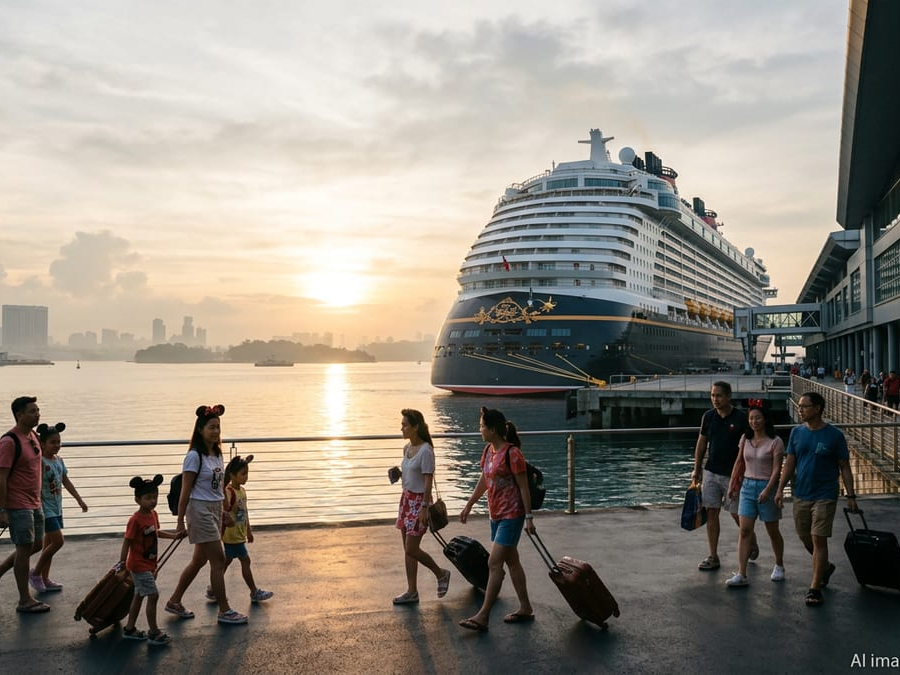
For three decades, Singapore was Southeast Asia’s de facto luxury travel hub, the logical first stop for any premium traveler entering the region. The reasoning was structural before it was aspirational. Changi Airport delivered on connection reliability in ways that Bangkok’s Suvarnabhumi and Kuala Lumpur International routinely did not. The hotel infrastructure in Singapore skewed premium at a density no competing city in the region could match through the 2000s and 2010s. The visa regime was welcoming to the high-spend visitor in ways that required considerably more friction elsewhere. Add the retail environment, the safety positioning, and the business connectivity that brought wealthy travelers into the city for commercial reasons as well as leisure, and Singapore did not merely capture the premium transit market. It largely defined what that market looked like.
What Built the Singapore Premium Travel Position
Understanding what is shifting requires understanding what was deliberately built. Singapore’s position as the luxury travel hub for SEA was not the default outcome of geography. It was the product of sustained infrastructure investment, airline policy, and destination branding that took place over a long enough period to become self-reinforcing.
Changi Airport Group data shows Changi regularly handles over 60 million passengers annually with connectivity to more than 100 countries and 400 cities. The airport’s reliability for connections is not incidental. It was engineered through investment in transfer processing infrastructure, terminal design for transit efficiency, and airline partner relationships that routed premium cabin passengers through Singapore rather than around it. Singapore Airlines’ network build-out was a deliberate complement to Changi’s positioning. As the carrier expanded routes and maintained premium product investment, it reinforced Singapore’s status as the preferred transit point for travelers who could pay for a better experience.
The hospitality investment followed the aviation infrastructure. According to Singapore Tourism Board industry data, Singapore’s hotel room stock in the upper-upscale and luxury segments grew significantly between 2005 and 2020, absorbing international brand arrivals that chose Singapore as their regional flagship. The combined effect was a destination that could handle premium demand at scale, in a way that smaller markets with individually impressive properties could not replicate at the system level.
Where the Contestability Is Building
Bangkok and Kuala Lumpur are the two markets most directly building capacity to challenge parts of Singapore’s premium travel position, for different reasons and on different vectors.
Bangkok’s challenge comes primarily from connectivity expansion and from the city’s intrinsic draw as a destination in its own right. Suvarnabhumi’s infrastructure problems, which were real and damaging to Bangkok’s hub potential through the 2010s, are being addressed with the continuing expansion of the airport’s terminal and runway capacity. More significantly, Bangkok’s emergence as a high-end dining, wellness, and luxury retail destination in its own right reduces the rationale for the Singapore stopover when the final destination is Thailand. A traveler from London or New York who previously transited through Singapore to get to a Thai resort can now assess whether Bangkok itself serves as the premium starting point. For an increasing number of them, the answer is yes.
Kuala Lumpur’s challenge is different. The city competes less on aspiration and more on cost and improving business connectivity. Premium travelers whose primary purpose is business rather than leisure experience a growing number of direct routes into KL that reduce the need for a Singapore connection. The Petronas Towers corridor has attracted enough multinational presence that some regional HQs, particularly in financial services and technology, have considered KL as a viable alternative to Singapore’s cost base. That conversation directly affects the business traveler who drove a significant part of Singapore’s premium hotel occupancy.
The analysis of [why SEA’s premium travel market remains structurally underserved](28. lifestyle-travel-sea-premium-market.md) showed that supply in the luxury segment across the region has been adding capacity. What that means for Singapore is that the relative scarcity that made it the default choice is diminishing as other cities build up.
What Singapore Has That Is Hard to Replicate
The contestability argument should not be overstated. Singapore retains structural advantages that Bangkok and KL cannot close in a short timeline.
The visa environment for wealthy travelers from China and India, both significant and growing source markets for luxury travel across SEA, remains meaningfully more accessible in Singapore than in several competing markets. The business infrastructure that brings high-net-worth individuals and their advisors to Singapore for wealth management, corporate governance, and family office activity generates a traveler category that is not primarily motivated by leisure appeal and that competes on a different axis than the standard luxury tourism benchmark. The Privilege Press review of how the Hong Kong to Singapore capital shift is reshaping professional and wealth travel patterns is relevant context for understanding how deeply Singapore’s travel market is linked to its financial services position.
The safety positioning and political stability that underpin Singapore’s appeal to international travelers also compounds in ways that are harder to build than a terminal extension. These are reputational assets that accumulate over decades and depreciate slowly.
The Strategic Question
Whether Singapore’s premium travel positioning will be overtaken in the near term is not the interesting question. The trajectory is not heading there. The relevant question is whether it is actively defending its lead with the same intensity that built it, or whether institutional confidence in the strength of the existing position is creating some complacency about the investments needed to maintain it.
The travelers reorienting toward Bangkok or routing directly to their destination rather than stopping in Singapore are not making loud announcements about the decision. The premium traveler defection, when it happens, tends to be quiet and cumulative. As the Privilege Press analysis of how Asia’s business travel recovery is revealing shifts in traveler behavior noted, the most significant changes in how the region’s travelers move are often visible in the routing data before they show up in the destination narrative. Singapore’s hub lead is real. The trajectory of that lead deserves the same attention as its current size.
Sources