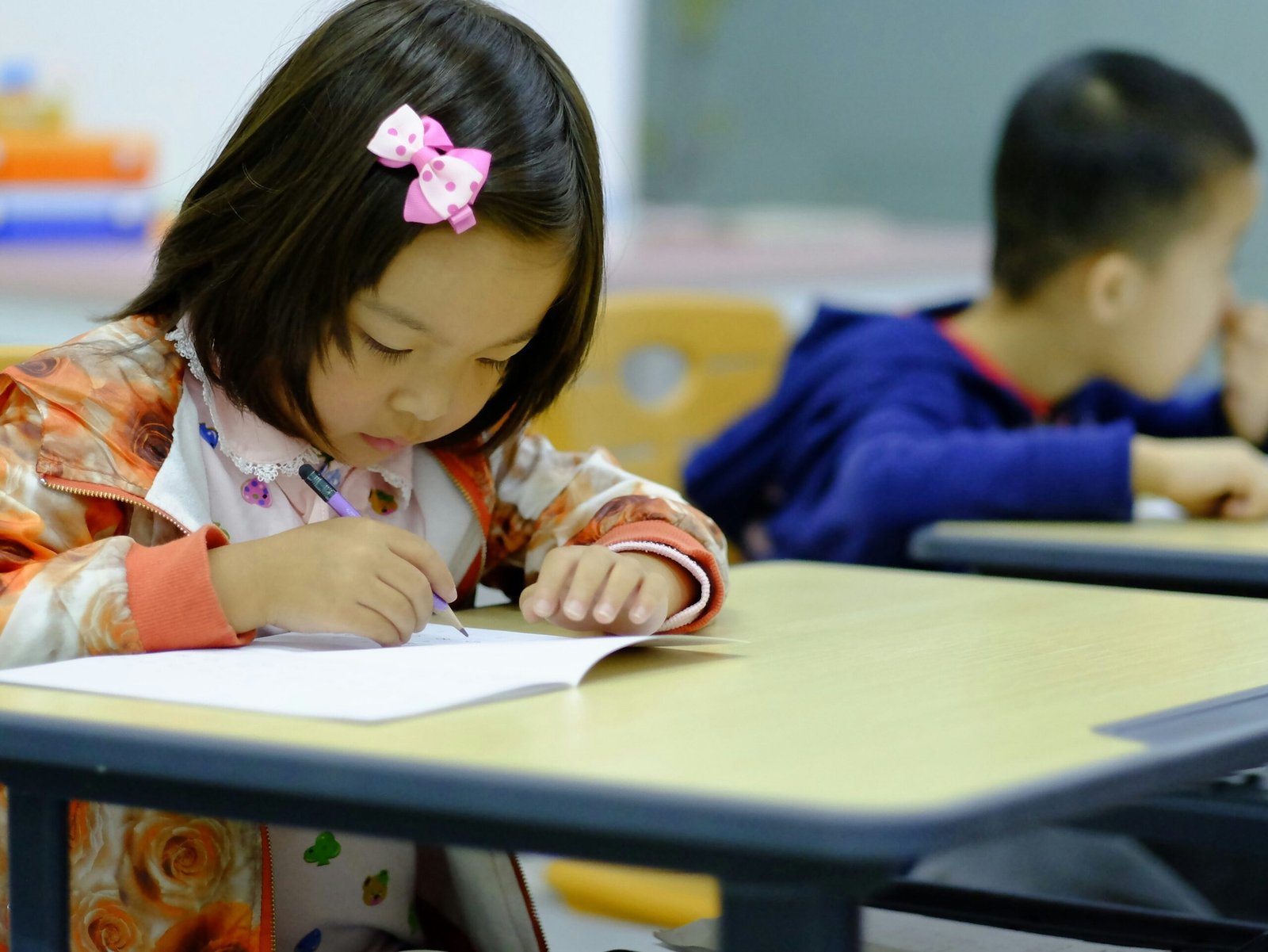
Picture the scene on any weekday evening across Bishan, Tampines, or Clementi. A child finishes school at 1:30pm, has lunch, and by 3pm is sitting across from a tutor — math, then Chinese, maybe English composition. By the time dinner happens, the school day has effectively continued for six more hours. This is not an edge case. It is the standard experience for a significant and growing proportion of children in Singapore, and increasingly in Malaysia too.
Singapore households spent S$1.8 billion on private tuition in 2023. That figure has grown from S$1.1 billion in 2014, a 63 percent increase in inflation-adjusted terms over a decade, during a period when average household income grew by 40 percent, according to research from the National Institute of Education at NTU. Tuition spending is growing faster than income. That is not the behaviour of supplementary education. That is the behaviour of something families have decided is non-negotiable.
Singapore’s Tuition Market Amplifies Inequality, Not Just Grades
The tuition industry in Singapore is not a single market. It layers across income bands in ways that tell a more complicated story than “parents are kiasu.” The top 20 percent of income earners spend S$162.60 per month per household on tuition. The bottom 20 percent spend S$36.30. Both groups are spending. The gap between them is not just a wealth gap — it is an access gap to the kind of tuition that actually moves outcomes.
This matters because the implicit promise of the tuition industry is that extra instruction leads to better grades, better school placements, and better life outcomes. That promise is not equally distributed. The families spending S$160 a month are typically buying access to experienced tutors with track records at elite schools, small group settings, and curated exam technique. The families spending S$36 are typically buying access to online platforms or student tutors with limited subject depth. Both are categorised as “private tuition” in the spending data. They are not the same product.
The result is a stratification that the tuition industry both reflects and amplifies. Children whose families can afford high-quality tuition gain preparation advantages that compound through the PSLE, O-Level, and A-Level system. Children whose families cannot afford it either go without or access a lower-quality substitute. The system that was meant to supplement formal education has become a parallel tier of access to academic advantage — and that tier is priced.
Kiasu Is a Rational Response to Singapore’s Exam System, Not a Cultural Flaw
Kiasu, Singapore’s cultural shorthand for the fear of losing out, captures part of the tuition story but not the structural core. The investment in exam preparation is rational, not anxious, because the examinations it targets have direct material consequences for a child’s secondary school placement and academic trajectory.
Singapore’s education system routes students through a series of high-stakes examinations that have direct, material consequences for secondary school placement and downstream academic trajectories. The Primary School Leaving Examination is not a low-stakes benchmark test. It determines which secondary school a child attends, which shapes peer networks, co-curricular access, and the teachers assigned to them. In that context, the decision to invest S$150 per month in exam preparation is not irrational anxiety. It is a rational response to a system where the stakes of underperformance are real and the variance that good preparation reduces is meaningful.
The kiasu framing individualises a behaviour that is structurally produced. Parents are not anxious because they have a cultural defect. They are anxious because the system is designed with pressure points that make anxiety the appropriate response to genuine risk.
Malaysia’s Tutoring Boom Follows the Same Structural Logic
The pattern replicates in Malaysia, though the drivers are differently weighted. The Malaysian K-12 tutoring sector has grown substantially, with industry estimates compiled by a Malaysian tutoring operator placing the market at USD 5 billion in 2024 and projecting strong double-digit compound annual growth through 2033. Here the anxiety is compounded by a public school system with more variable quality across states and income bands, by the Bahasa Malaysia versus English medium tension that creates parallel academic preparation needs, and by the perception gap between public university access and private university affordability.
In both markets, the tuition industry is a symptom indicator. When the informal education market grows faster than the formal one, it typically means that the formal system is not delivering enough of what families actually need — whether that is academic preparation, exam technique, confidence, or individual attention in overcrowded classrooms. The tuition provider fills the gap. The family pays for it. The spending data accumulates.
What the $1.8 Billion in Singapore Tuition Spending Doesn’t Buy
The NIE research on Singapore’s tutoring industry draws a careful distinction between tuition that builds genuine academic capability and tuition that builds exam-specific technique without transferable depth. Drilling for specific examination formats, teaching pattern recognition for common question types, and coaching for scoring efficiency make up the dominant category because they produce the outcome families are purchasing in the near term. Whether it produces learning that compounds through adulthood is a different and less studied question.
The $1.8 billion is being spent on risk reduction in a high-stakes system. The industry that captures that spending is selling the feeling that you have done what a responsible parent is supposed to do, not education. Those are related products, but not the same one.
For a related read on the economic architecture of homeownership decisions that similarly reflects Singapore’s culture of front-loaded financial commitments, see our CPF OA investment analysis. For the broader pattern of how Singapore’s structured systems produce early financial pressure on families, see our analysis of the BTO queue as a financial decision.
Sources: