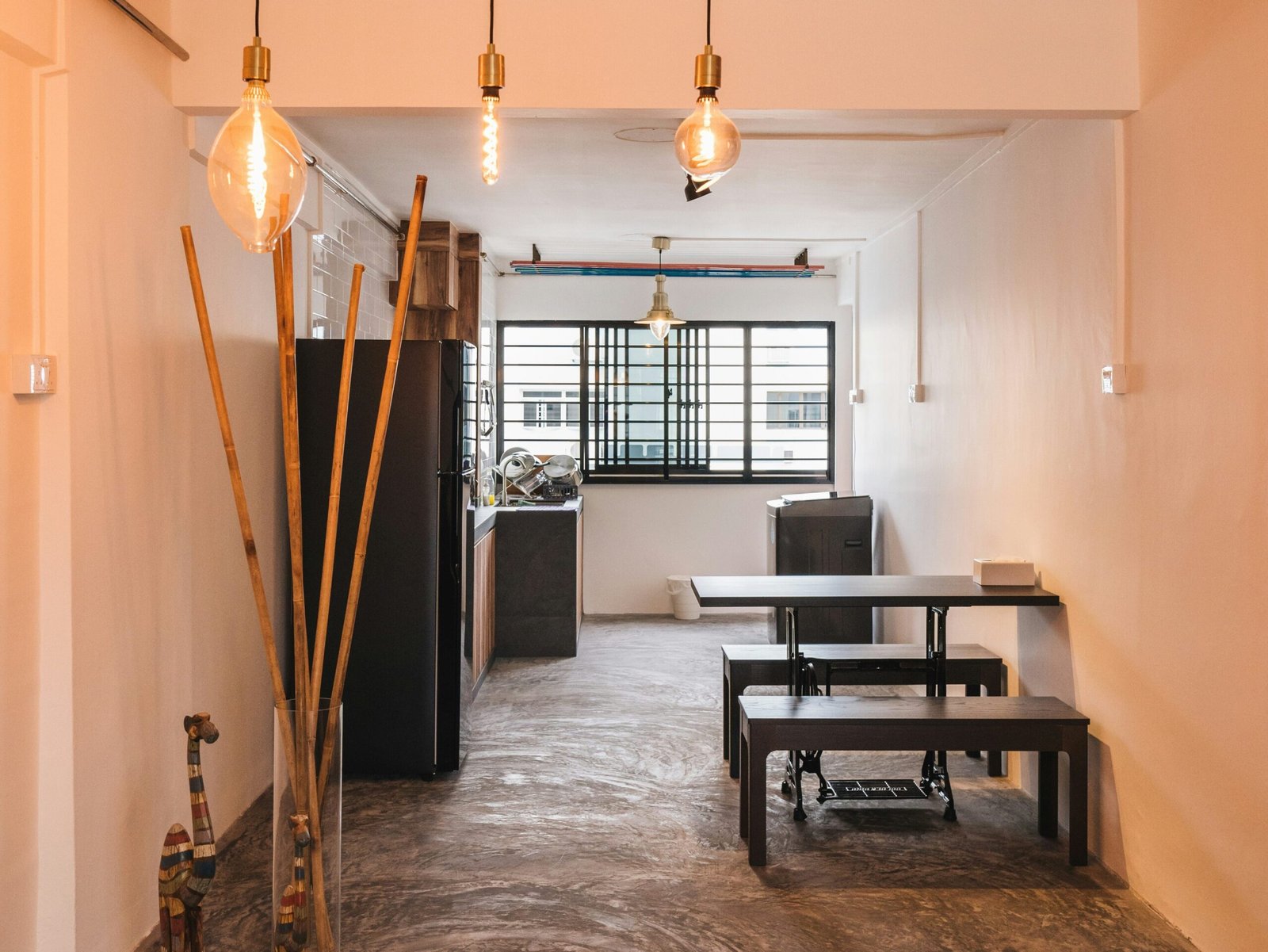
Singapore home renovation cost financial planning is not a phrase that appears in most homeowner conversations. What appears instead is a mood board, a contractor shortlist, and a rough budget that starts at “around S$50,000” and finishes somewhere considerably higher. For HDB resale flats, renovation costs typically range from S$40,000 to S$90,000 depending on flat type, scope of work, and finish quality, according to MoneySmart’s 2026 HDB renovation cost guide. For condominiums, the range shifts lower on a per-room basis because many units come with pre-installed flooring and fittings, but the total can still exceed S$60,000 for anything beyond a cosmetic refresh.
These are not small numbers. For many Singapore households, the renovation is the second-largest single expenditure after the property purchase itself. And yet the standard approach to renovation budgeting treats it as a lifestyle decision rather than what it actually is: a capital allocation that affects cashflow, asset value, and long-term financial flexibility.
The Budgeting Problem Starts Before the Contractor Quote
The most common financial mistake in Singapore home renovation is not overspending on tiles or carpentry. It is the failure to integrate renovation cost into the broader property acquisition model. Most buyers calculate their affordability around the purchase price, stamp duty, and mortgage servicing. Renovation is treated as a separate, subsequent decision. This sequencing creates a cashflow compression that many first-time buyers are not prepared for.
The purchase transaction depletes savings, mobilises CPF, and commits the household to a monthly mortgage obligation. Renovation spending arrives immediately after, precisely when the financial cushion is thinnest. Without a renovation budget built into the pre-purchase plan, homeowners face a choice between taking on additional debt through a renovation loan, compromising on the renovation scope, or depleting emergency reserves that should remain intact.
As covered in our analysis of the full cost layers that most Singapore homebuyers underestimate, the gap between the headline purchase price and the true cost of ownership is routinely 20 to 30 percent when renovation, maintenance, taxes, and CPF accrued interest are aggregated across a full holding period. Renovation is the single largest component of that gap in the first year of ownership.
What Renovation Actually Returns
The question that transforms renovation from a lifestyle decision into a financial one is straightforward: what does this spending return? Not in emotional satisfaction, which is real and legitimate, but in asset value and functional longevity.
The answer depends heavily on what type of renovation is being done. Structural and systems upgrades, including electrical rewiring, plumbing replacement, waterproofing, and air conditioning infrastructure, have long functional lifespans and reduce future maintenance costs. These investments compound in the sense that they prevent larger repair bills over the ownership horizon.
Cosmetic upgrades, including feature walls, custom carpentry, premium surface finishes, and designer lighting, depreciate rapidly. A S$15,000 custom kitchen island looks excellent on move-in day and carries minimal resale premium five years later. In the HDB resale market specifically, buyer preferences vary widely enough that heavily customised interiors can actually narrow the pool of interested buyers rather than expand it.
The HomeMatch 2026 renovation cost analysis breaks down typical spending by category and shows that carpentry consistently represents the largest single cost line, often exceeding 30 percent of total renovation budget. Carpentry is also the category with the fastest aesthetic depreciation and the most variable resale recovery. For a financially minded homeowner, this is the category that deserves the most scrutiny per dollar spent.
The Renovation Loan Trap
HDB renovation loans, available through HDB up to S$30,000 for HDB flat owners, and bank renovation loans up to S$30,000 with typical tenures of one to five years, represent convenient financing for homeowners who have depleted savings on the purchase. According to Qanvast’s 2026 renovation cost data, the majority of four-room and five-room HDB renovations exceed S$40,000, meaning the loan ceiling covers only a portion of total costs even before material upgrades are factored in. They also represent a cost layer that many borrowers underestimate.
A S$30,000 renovation loan at 3.5 percent interest over five years adds approximately S$2,700 in total interest cost. This is modest in isolation. But it arrives on top of the mortgage, property tax, maintenance charges, and insurance that collectively define the monthly ownership cost. For a household already stretched by the property purchase, the renovation loan converts a one-time expenditure into a recurring obligation at the worst possible moment in the financial cycle.
The alternative is pre-planning. A household that budgets S$500 to S$800 per month toward renovation savings in the 18 to 24 months before key collection can accumulate S$12,000 to S$19,200 before the renovation begins. Combined with judicious scope management, this approach reduces or eliminates the need for a renovation loan and preserves financial flexibility in the critical first two years of ownership.
Depreciation Is Real and Rarely Modelled
Home renovations in Singapore depreciate. This is obvious in principle and ignored in practice. A renovation completed today will look and function well for five to eight years before surfaces wear, fixtures age, and design preferences shift. By year ten to twelve, most homeowners either renovate again or accept diminished quality.
For a homeowner planning to sell within eight to ten years, the renovation depreciation schedule directly affects the financial outcome. A S$80,000 renovation that retains S$20,000 in perceived resale value at the point of sale represents a S$60,000 net cost over the holding period, or approximately S$6,000 to S$7,500 per year. This annual depreciation cost should sit alongside mortgage interest, maintenance fees, and property tax in any honest accounting of what home ownership costs on an annualised basis.
As explored in our analysis of the CPF opportunity cost embedded in Singapore home purchases, the financial arithmetic of property ownership in Singapore is already more complex than most buyers model. Adding renovation depreciation to that arithmetic changes the total cost picture, particularly for owners who renovate at the higher end of the spending range.
What a Financial Model Would Include
A renovation financial model does not need to be complex. It needs to account for four things that most homeowners currently treat as afterthoughts.
The first is total renovation cost as a percentage of property purchase price. If the renovation exceeds 8 to 10 percent of the property value, the financial case for the scope of work deserves closer examination.
The second is the split between structural and cosmetic investment, with a clear-eyed assessment of what each category returns in functional lifespan and resale value.
The third is the financing structure, distinguishing between cash, CPF, and loan-financed renovation spending, each of which carries different true costs when interest, opportunity cost, and repayment timing are considered.
The fourth is an annualised depreciation estimate that converts the one-time renovation cost into a recurring annual figure for comparison with other ownership costs.
For professionals who apply rigorous financial analysis to investment decisions and business expenditures, the notion of spending S$60,000 to S$90,000 without a structured financial framework should feel uncomfortable. The renovation is not separate from the property decision. It is part of the same capital allocation, and the household that models it that way will make better decisions about scope, timing, financing, and the tradeoff between customisation and financial flexibility.
For anyone weighing the full cost of Singapore housing against alternative arrangements, including the cross-border living calculation that more professionals are running since the RTS link opened, the renovation cost is a variable that changes the comparison materially. A S$70,000 renovation amortised over eight years is S$730 per month in hidden ownership cost.