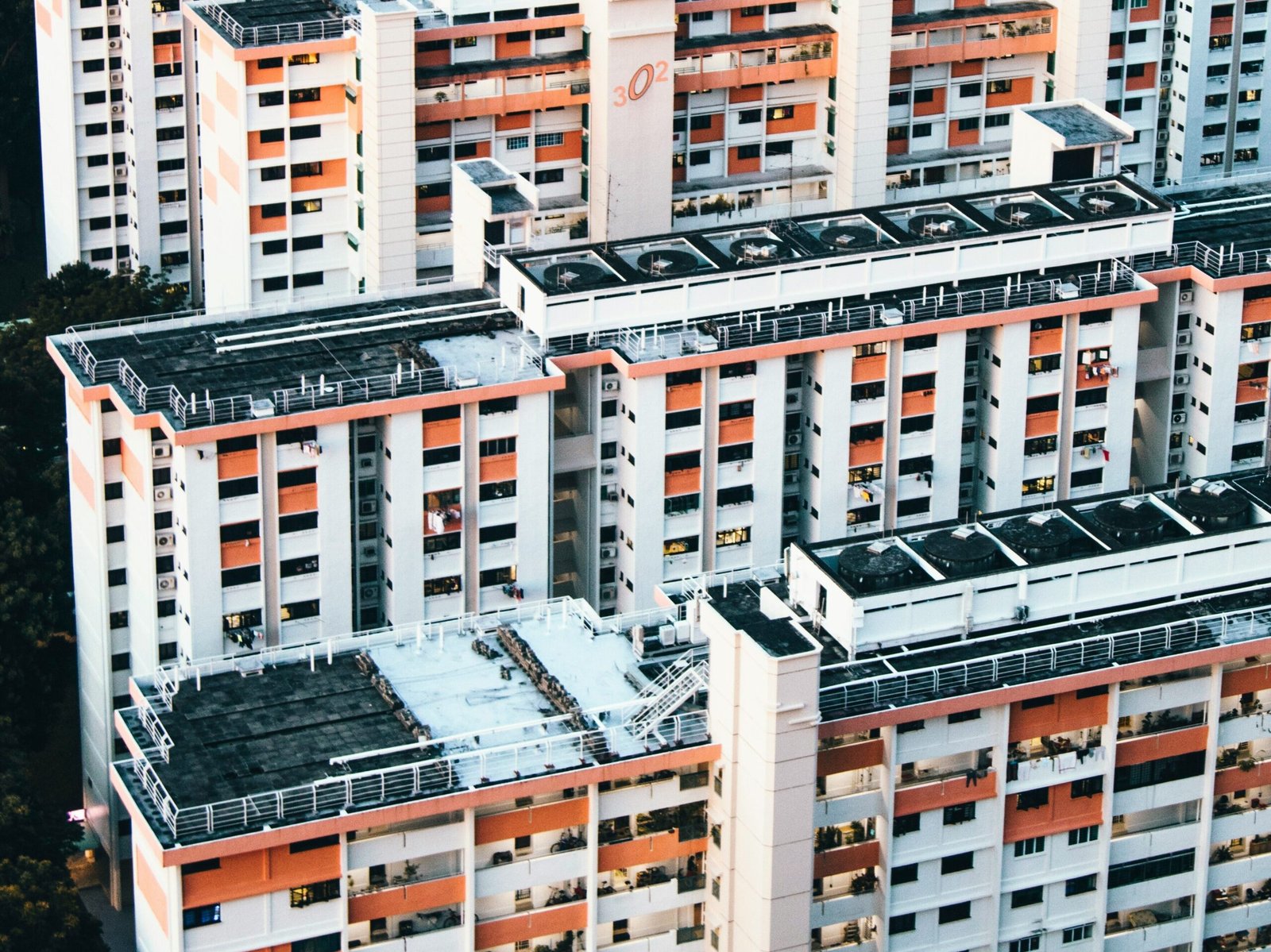
Singapore’s CPF system has been studied and admired internationally for four decades. Its mandatory contribution structure, currently 37 percent of gross wages for employees under 55 split between employer and employee, creates a forced savings rate that most comparable economies cannot replicate voluntarily. The result is a retirement savings system that has produced genuinely broad asset accumulation across income levels and a homeownership rate that exceeds 90 percent, among the highest in the world.
The mechanism that connects these two outcomes is the CPF Ordinary Account housing withdrawal rule — the provision that allows CPF OA balances to be used for property purchases, including HDB flats and private property. This rule is the engine of Singapore’s mass homeownership achievement. Without it, first-time buyers across much of the income distribution would face cash deposit requirements that would price them out of ownership indefinitely.
The same rule is also one of the least examined sources of long-term financial risk in Singapore household balance sheets. The question that most CPF housing discussions avoid is not whether using CPF OA for housing is legal or common (it clearly is both), but whether, on a full-cost analysis, it is the optimal use of that capital for the majority of households who default to it.
What CPF OA Housing Withdrawal Actually Costs After 20 Years
A household that withdraws S$200,000 from CPF OA to buy an HDB flat must return S$327,500 from the eventual sale before any cash profit is realised. That is the accrued interest at 2.5 percent over 20 years. Most CPF housing conversations frame this as a repayment obligation. It is also a cost.
The CPF Ordinary Account earns a guaranteed 2.5 percent per annum, with an additional one percent on the first SGD 60,000 of combined CPF balances. This is a risk-free government-guaranteed return, which in a global low-rate environment was significantly above comparable alternatives. In the current environment, it remains competitive as a risk-free instrument but is materially below the historical real returns available from diversified equity investment over a twenty-year horizon.
When you withdraw CPF OA funds to purchase a property and subsequently sell that property, the CPF Board requires repayment of the principal withdrawn plus the accrued interest that would have been earned had the funds remained in the OA. This is the mechanism that most CPF housing conversations focus on — and they usually frame it as a protection or a requirement, rather than as a cost. It is both, and understanding the cost component changes the analysis.
Consider a household that withdraws SGD 200,000 from CPF OA at the time of an HDB purchase. Over twenty years, at 2.5 percent, the accrued interest on that withdrawal is approximately SGD 127,500 — the household must return SGD 327,500 from the sale proceeds before any cash profit from the sale is realised. If the property appreciates from SGD 600,000 to SGD 1,000,000 over that period, a plausible but not guaranteed outcome, the nominal gain is SGD 400,000. After returning SGD 327,500 to CPF (and after accounting for property taxes, maintenance fees, and transaction costs), the cash-in-hand surplus from the sale is materially smaller than the headline appreciation number suggests. The money returned to CPF is yours, sitting in your OA, but it is not freely deployable. It is subject to withdrawal age restrictions and the Retirement Account minimum sum rules that constrain what you can actually spend in retirement.
The Compound Opportunity Cost of Redirecting CPF OA Into Property
The CPF OA earns 2.5 percent guaranteed. A well-diversified equity allocation has returned 7 to 10 percent annually over 30-year rolling periods. On S$200,000 over 20 years, the difference between those two outcomes is roughly S$445,000. That is the opportunity cost most households never calculate.
The more fundamental challenge with CPF OA housing withdrawal is the compound opportunity cost of redirecting that capital from financial assets into an illiquid property asset. The CPF OA’s 2.5 percent guaranteed return is the floor. The ceiling is what a well-diversified equity allocation would have returned over the same period.
MSCI’s long-run data on global equity returns shows developed market equities delivering approximately 8 to 10 percent annually in nominal terms over thirty-year rolling periods, with significant variation around that range. The Dimensional Fund Advisors research on long-term asset class returns for Singapore investors suggests similar ranges for globally diversified equity exposure. Even applying a conservative 7 percent expected return assumption on equity, the compound growth of SGD 200,000 over twenty years is approximately SGD 773,000 — compared to SGD 327,500 for the same sum growing at 2.5 percent in CPF OA, or the property value it purchased.
This is not a recommendation to avoid homeownership. It is an observation that the housing decision is simultaneously a consumption and investment choice, and the investment component is systematically evaluated less rigorously than most CPF holders recognise. The CPF Board itself provides modelling tools for housing withdrawal calculations, but these tools focus on repayment obligations rather than the opportunity cost of the capital deployed.
Who the CPF Housing Paradox Hits Hardest in Singapore
The CPF housing paradox lands differently across income levels. For lower-income households, CPF OA access is genuinely enabling. For middle-to-upper-income households with sufficient cash flow to service a mortgage, defaulting to CPF is often a habit, not a necessity, and the opportunity cost is real.
The CPF housing paradox lands differently across income levels and property choices, which is where the policy complexity sits.
For lower-income households purchasing HDB flats, including those eligible for the Enhanced CPF Housing Grant of up to SGD 120,000, the CPF withdrawal mechanism is genuinely enabling. Without it, ownership would be structurally inaccessible. The grant subsidy also partially offsets the opportunity cost of the OA withdrawal, because some of the capital was effectively transferred rather than earned.
For middle-to-upper-income households purchasing private property, where CPF OA contributions are being used to service mortgage payments on units in the SGD 1.5 to 3 million range, the calculation is different. These households have sufficient income that the housing mortgage is serviceable through cash flow. The CPF OA usage is often default behaviour rather than necessity. The opportunity cost of directing CPF into property servicing, rather than leaving it to compound in the OA or channelling it through the CPF Investment Scheme into higher-returning assets, is a genuine financial cost that is rarely evaluated at the point of decision.
The households that have systematically made the better long-term financial choice are those who kept their CPF OA maximally funded, used cash for property down payments where possible, and either left the OA to compound or invested the surplus above the minimum sum threshold into the CPFIS. This approach requires either higher income to provide cash for housing costs without relying on CPF, or genuine financial planning discipline that runs against the default of reaching for CPF OA when a mortgage requires funding.
What the CPF Housing System Was Built for and Where It Creates Friction
The CPF housing mechanism was designed to solve a specific problem: enabling broad homeownership access in a high land-cost city-state without requiring household savings rates that most incomes could not support. It solved that problem effectively. Singapore’s homeownership rate is the direct result of this policy architecture.
The friction arises because the same system that enables first-time home purchase also constrains the retirement financial position of households that have deployed significant OA capital into property and now face a retirement income gap that CPF LIFE payouts alone may not adequately fill. The connection between housing decisions made in the thirties and retirement adequacy in the sixties is real and is structurally underweighted in the CPF housing conversation.
The MAS’s annual Financial Stability Review consistently notes the high household debt-to-income ratios in Singapore, driven substantially by property-related borrowing, as a source of systemic monitoring concern. The household balance sheet issue is not hypothetical — it is visible in the aggregate data. Most of it flows directly from the interaction between high property prices, CPF housing withdrawal, and the leverage required to fund purchases at current market valuations.
The CPF system is not broken. It is genuinely excellent at what it was designed to do. The gap is that enabling mass homeownership sometimes conflicts with what households need CPF to do, which is build adequate retirement income. Understanding that tension before the property purchase is the analysis that most financial planning conversations in Singapore stop short of.
For the broader retirement income gap that CPF housing decisions compound over time, see our CPF LIFE income gap analysis. For the investment opportunity cost of CPF OA, specifically when the 2.5 percent floor wins versus when equities make more sense, see our CPF OA investment trade-off piece.