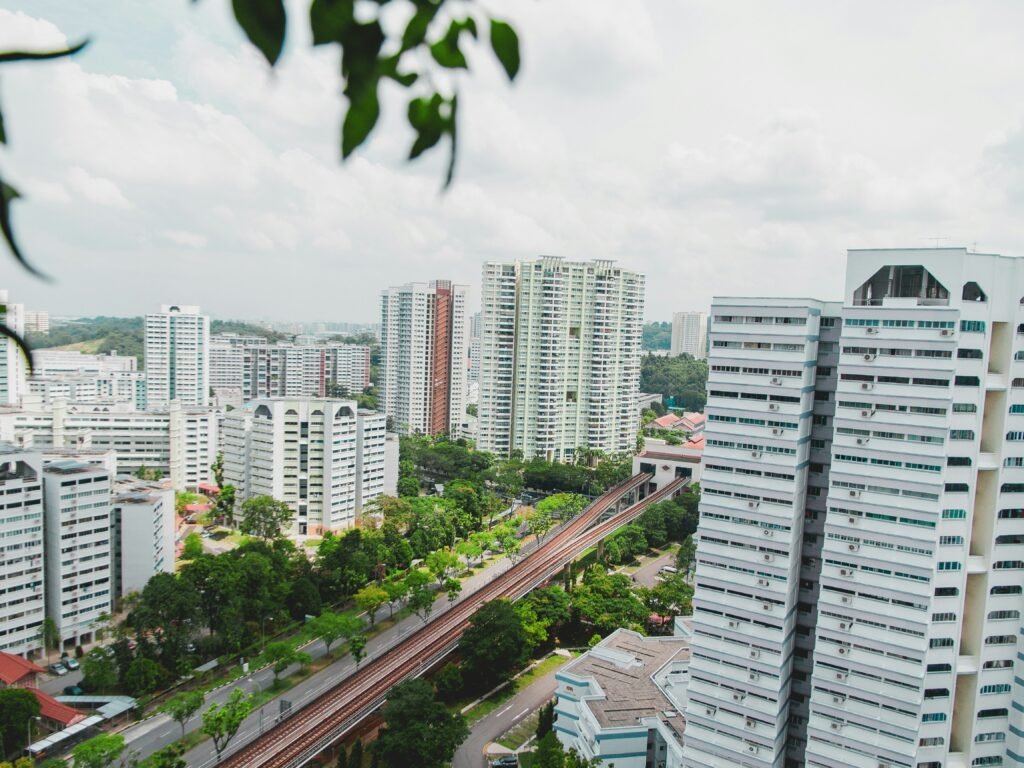
The chain from AI compute costs to your power bill is shorter than most Singapore households realise. Singapore lifted its data centre moratorium in 2022 after a three-year pause introduced in 2019, when data centres were already drawing about 7% of national electricity. The lift came with green-energy conditions, efficiency mandates, and a phased capacity allocation through the Data Centre Call for Application programme. Demand from AI training and inference workloads since then has grown faster than the green supply being permitted to come online. That gap shows up in the wholesale market, then in the regulated retail tariff that the Energy Market Authority publishes every quarter. It now shows up in the household bill.
For the period 1 April to 30 June 2026, the EMA approved a 2.1% household tariff increase, with the regulator flagging that sharper increases are likely later in the year. The headline reasons cited include higher natural gas costs and Middle East energy market volatility. Those are real. They are not the whole story. Underneath the gas price story is a structural demand pull from data centre load that did not exist at this scale five years ago, and that is being absorbed by a generation mix Singapore has deliberately constrained for environmental reasons.
The Singapore Demand Picture After the Moratorium
Singapore’s data centre footprint sits at roughly 1.4 gigawatts of installed capacity as of early 2026, placing the country in the top three Asia Pacific markets by density. The DC-CFA2 programme launched on 1 December 2025 allocates an additional 200 megawatts of capacity, with applications closing 31 March 2026 and successful operators required to source at least 50% of their power from approved green energy pathways. The programme is calibrated to allow growth without pushing data centre share of national electricity past a level the EMA is willing to absorb.
The arithmetic is uncomfortable. AI training workloads pull 30% to 50% more electricity per rack than traditional cloud computing. Hyperscaler footprints in Singapore are migrating toward GPU-heavy configurations to support inference and post-training work for the major model families. The capacity that comes online from DC-CFA2 will be more energy-intensive per square metre than the legacy capacity it sits alongside, even with the green-energy mandate. That intensity, multiplied across the regional cluster of hyperscaler investment we have covered in our analysis of why big tech is spending billions on Southeast Asian soil, is the underlying demand pull on grid prices.
Generation supply is the constraint. Singapore’s electricity mix remains roughly 95% natural-gas fired through 2026, with the remainder split across imports and small renewable contributions. The country’s solar potential is genuinely limited by available rooftop and reservoir surface, which means the green-energy mandate on data centres relies heavily on regional power imports through the Lao PDR, Cambodia, Thailand and Singapore framework and the proposed undersea cable from Indonesia. Both pathways are real and both are slower to scale than data centre demand is willing to wait for.
The Regional Comparison
The Singapore picture sits inside a broader Asian story documented by the International Energy Agency’s Electricity 2026 report. Global data centre electricity consumption is projected to roughly double from 485 terawatt hours in 2025 to 950 terawatt hours by 2030, with AI-focused data centres tripling in the same period. Asia Pacific captures a disproportionate share of that growth because the region is where hyperscaler capacity expansion has been most aggressive and where local grids were not built for the load profile.
Malaysia, particularly Johor, has absorbed a meaningful share of the data centre capacity that Singapore could not approve during the moratorium years. The Johor cluster now hosts some of the largest hyperscaler campuses in Southeast Asia. Tenaga Nasional, the Malaysian utility, is engaged in a multi-year capacity expansion to meet that demand, and Malaysian household tariffs have begun to drift upward as well, driven by both data centre load and broader fossil-fuel input cost pressures. Indonesia is positioning Batam and Bekasi for a similar role, with the additional friction that Indonesian grid reliability is materially weaker, which will push hyperscalers toward dedicated generation or behind-the-meter solutions that further entangle data centre economics with the local energy market.
The pattern is consistent. The capital expenditure of major data centre operators across the region has accelerated, and the IEA’s analysis of energy demand from AI puts global tech capex at over $400 billion in 2025, projected to rise another 75% in 2026. Some of that capex builds dedicated generation. Most of it relies on existing or modestly expanded grid capacity. The marginal user paying the increase is not the hyperscaler. It is the household further down the same wire.
The Investor Read
For investors with regional exposure, retail electricity is becoming an AI-correlated asset class in a way that did not used to be true. Singapore’s regulated framework limits direct upside to a single operator in retail electricity, but the related listings, including Sembcorp Industries on the SGX, the regional gentailers operating in Australia and Malaysia, and the Asian utilities exposed to gas turbine demand, have a clearer demand tailwind than they did three years ago.
The connection extends into commodities. Natural gas demand across Asia Pacific remains structurally elevated as long as data centre additions outpace renewable build, which sits inside the broader picture covered in our analysis of how SEA economies are navigating the commodity reset and the framework for why SEA commodity currencies diverge from equities under specific demand-led shocks. AI compute is not a one-quarter shock. It is a multi-year demand pattern that revalues regional power assets in ways that take time to show up in equity prices.
The investor caveat is also important. Regulators across the region, including the EMA, are sensitive to the political optics of household tariff increases that visibly fund corporate data centre expansion. Tariff structure changes that shift more of the increase onto industrial and commercial users are plausible. The cleanest play is exposure to the regional generation and transmission build itself, rather than to retail electricity specifically.
The Consumer Read
For Singapore households, the practical implication is that real electricity costs are likely to drift higher through 2027 regardless of the headline narrative around any single quarter’s gas price movement. The structural demand floor is now set by data centre and AI compute load, layered on top of the existing residential and commercial baseline. Quarterly tariff revisions will continue to track gas prices on the surface, but the gas price itself increasingly reflects a demand pattern shaped by hyperscaler procurement.
Practical responses for consumers are limited but real. Households on standard regulated supply have less choice than households who can switch to retailers offering fixed-rate plans, and the relative attractiveness of fixed-rate plans rises in a structurally rising tariff environment. Solar PV adoption on private property remains constrained by available roof area, but the marginal economics improve as grid tariffs rise. Energy-intensive home equipment, particularly air conditioning units sized for older configurations, becomes a more meaningful annual cost line when the rate per kilowatt-hour drifts upward steadily.
The deeper observation is that Singapore is not unusual. The country is just earlier and more visible because its regulated tariff structure publishes the information quarterly. The same pull is showing up in Malaysian, Indonesian, and Vietnamese household electricity costs, with longer lags and less transparent attribution. The capital being deployed into AI compute is real money, drawing on real power, sourced from real grids, paid for in part by households who never opened a chatbot. That is not a moral observation. It is a pricing one. The bill has a return address.
What this also means for policy across the region is that the existing tariff-attribution language is unlikely to survive intact. Regulators in Singapore, Malaysia, and Indonesia are all under pressure to be more explicit about how much of a quarterly increase reflects fuel input cost and how much reflects load growth from data centre and AI compute additions. Households respond differently to the two stories. Investors do too. The countries that move first to a more transparent attribution framework will set the regional template.