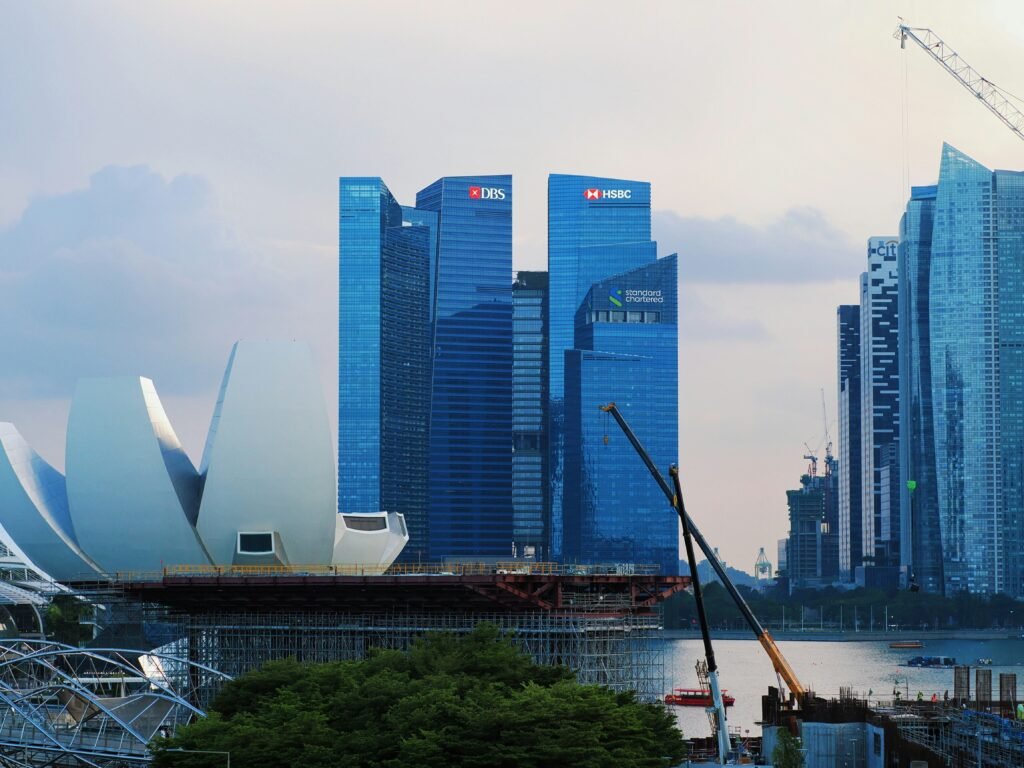
Microsoft committed $2.2 billion to Malaysia. Google followed with a $2 billion pledge, also in Malaysia. AWS put $6 billion on the table across Malaysia, Thailand, and Indonesia. Microsoft is also building a new Azure datacenter region (Southeast Asia 3) in Johor Bahru. The Southeast Asian data centre market, valued at $13.71 billion in 2024, is projected to exceed $30 billion by 2030, according to market research covering the regional build-out.
The standard explanation is that latency requires compute closer to the user, lower round-trip time, and better performance for the region’s 680 million people. That explanation is true but incomplete. Latency was solvable five years ago with modest incremental investment. What changed is not the latency requirement. What changed is the regulatory environment, the AI infrastructure race, and the geopolitical calculus around where data gets processed and under which legal jurisdiction.
The Three Forces Behind Big Tech’s Southeast Asia Infrastructure Bet
The first is enterprise AI demand. The shift from cloud computing as a storage and processing layer to cloud computing as an AI inference and training layer changes the economics of data centre investment substantially. AI workloads are GPU-intensive, consume more power per rack, and require more sophisticated cooling infrastructure than standard compute. Building for AI demand requires a different investment scale and a longer payback horizon than building for traditional cloud workloads. The hyperscalers are not building commodity compute capacity in SEA. They are building AI infrastructure, and the capital requirement for that infrastructure is structurally larger.
The second force is data sovereignty regulation. Southeast Asian governments are increasingly legislating requirements around where citizen and enterprise data can be stored and processed. Indonesia, Malaysia, Thailand, and Vietnam all have data localisation requirements or are moving toward them. For a large enterprise operating in multiple SEA markets (a regional bank, an insurance company, a logistics platform), the ability to run workloads on infrastructure that is physically located within the relevant jurisdiction is becoming a compliance requirement rather than a preference. Microsoft’s Azure expansion into Malaysia and Indonesia is partly a direct response to this regulatory direction. If your customers need to keep their data in-country, you need to be in-country.
The third force is geopolitical risk management. The concentration of global compute capacity in a small number of geographic locations (primarily the US East Coast, Ireland, and Singapore) became visibly fragile during the pandemic and became strategically concerning during the acceleration of US-China tensions. The hyperscalers are diversifying their infrastructure footprint not just for commercial reasons but because sovereign governments, including their largest enterprise customers, are asking them to. A data centre in Malaysia or Indonesia is not solely a commercial asset. It is a positioning decision in a conversation about where technology infrastructure sits relative to geopolitical fault lines.
Why Malaysia Is Receiving a Disproportionate Share of Big Tech’s SEA Capital
The concentration of commitments in Malaysia is not accidental. Penang has a decades-long semiconductor and electronics manufacturing history that produced the engineering talent and supply chain infrastructure that data centre operations require. Power costs in Malaysia are materially lower than Singapore, a meaningful operational factor when AI workloads are consuming 10 to 100 times the power per rack of legacy compute. Land is available at scale. The government has actively created investment incentives through the National Semiconductor Strategy and related industrial policy. Johor’s proximity to Singapore (increasingly expensive, land-constrained, and power-limited) means that the Johor-Singapore corridor is emerging as a de facto extended data centre zone, connected by the planned Rapid Transit System link and operating as a single functional geography for technology infrastructure.
Singapore will not be displaced as a coordination hub. Its role in regional cloud infrastructure is as the control plane: the headquarters location, the interconnect exchange, the place where enterprise customers configure and manage their cloud architecture. The compute itself is increasingly moving to where power is cheaper and land is more available.
What the Data Centre Boom Means for Enterprise Technology in Southeast Asia
The hyperscaler infrastructure build-out changes the competitive dynamics for enterprise technology vendors in the region. When AWS, Azure, and Google Cloud are all operating with in-country infrastructure in the major SEA markets, the enterprise selling motion becomes significantly easier. The compliance objection (“we can’t put our data on a foreign cloud”) historically blocked cloud adoption in regulated industries like banking and insurance. This objection is progressively removed. Cloud adoption should accelerate in the segments of the SEA enterprise market that have been the slowest to move: government-linked companies, financial institutions, and healthcare organisations operating under strict data governance requirements.
It also changes the competitive position of local cloud providers and regional data centre operators. The hyperscalers are not entering SEA with niche products. They are entering with the full stack (infrastructure, platform services, AI tooling, and the enterprise sales capacity) to displace incumbents who built their positions when US cloud providers had no local presence.
For founders building enterprise software in SEA: the infrastructure layer is becoming commoditised at a faster rate than most product roadmaps have accounted for. The moat is not running on the same infrastructure as your customer. The moat is the workflow, the local language model fine-tuning, the regulatory integration layer, and the customer success capacity that a global platform cannot localise at sufficient depth. The hyperscalers are building the road. The question for everyone else is what they’re driving.
For a related read on how AI is changing operational dynamics in SEA businesses beyond the infrastructure layer, see our analysis of AI implementation versus API wrappers. For context on how capital is flowing through the broader technology sector, see our Q1 2026 SEA tech funding review.
Sources:
- Southeast Asia Data Centre Landscape Report 2025–2030 — Yahoo Finance / Research Report
- Microsoft’s Commitment to Supporting Cloud Infrastructure Demand in Asia — Microsoft Azure Blog
- Google Commits $2 Billion to Malaysia Data Centres — Fortune Asia
- Southeast Asia Data Center Market — Arizton Research