Southeast Asia opened 2026 with what appeared, on the surface, to be a decisive capital surge. January numbers crossed $2.18 billion in equity funding, an 865% jump from January 2025. Regional commentators circulated headlines about recovery and renewed investor confidence. The numbers, however, do not say that. What they say is more instructive, and considerably more uncomfortable.
Remove a single transaction from the January total and funding collapses to $182.6 million represents a 55% decline from December 2025. That single transaction was DayOne Data Centers’ $2.05 billion Series C, announced on January 5, led by Coatue Management with participation from Indonesia’s sovereign wealth fund, the Indonesia Investment Authority.
By February, the mask came off entirely. Startups across Southeast Asia raised $128.7 million across 27 equity deals, showing a 94% drop from the reported January figure. Deal count for January itself had hit its lowest recorded point, with 25 transactions representing a 39% month-on-month decline. These are not the metrics of a market recovering. They are the metrics of a market recomposing, slowly, around a much narrower thesis.
Understanding what Q1 2026 actually signals requires separating three distinct capital stories that have been folded into the same regional narrative: the infrastructure mega-bet, the applied AI inflection, and the structural concentration problem that the first two are beginning to expose.
Why the Q1 Infrastructure Raises Are Not a Startup Recovery Signal
DayOne is not a venture-backed startup in any conventional sense. It is a next-generation hyperscale infrastructure platform, formerly known as GDSI, with operations spanning Singapore, Johor, the Riau Islands, Thailand, Japan, and Hong Kong. DayOne Data Centers Series C financing, building on the $1.9 billion raised across two prior rounds in 2024, represents one of the largest private capital raises in the data center sector globally. With a long-duration sovereign co-investor sitting alongside a growth-stage global fund, the round looks far more like infrastructure financing than venture capital allocation.
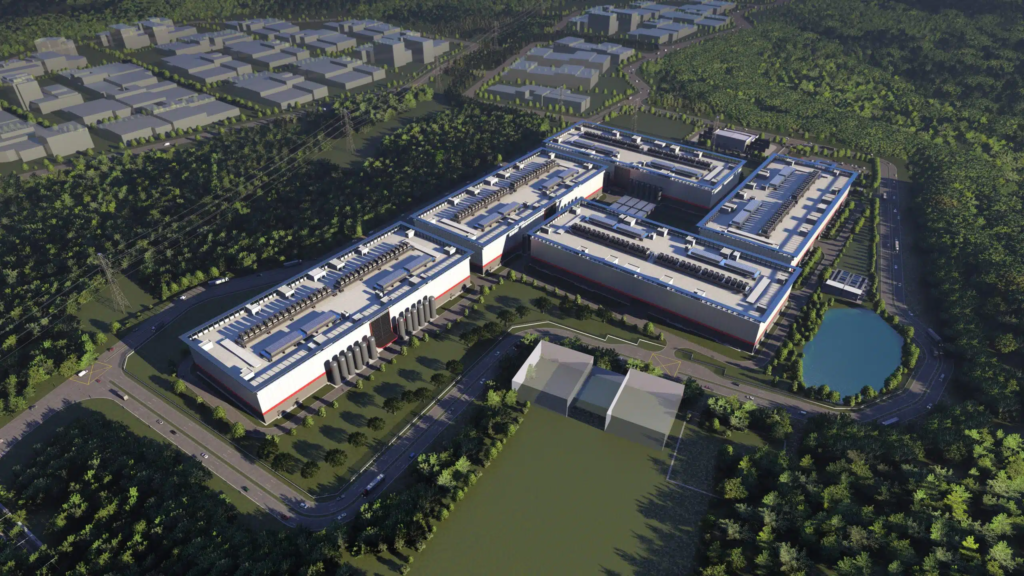
Princeton Digital Group, another Singapore-based data center operator, separately closed a $1.3 billion late-stage round during the quarter. Taken together, these two transactions account for the overwhelming majority of Q1 2026’s headline funding figure across the region. Stripping them from the total leaves a picture of early and growth-stage capital that has not recovered and shows no clear sign of doing so.
This matters for how analysts and founders read the regional data. Infrastructure capital and venture capital move through different mechanisms, serve different LP mandates, and respond to different signals. Conflating them inflates the regional funding story while obscuring the reality facing the startup ecosystem beneath.
The underlying rationale for both transactions is not difficult to read. Across Southeast Asia, and Singapore in particular, AI compute demand is running into chronically undersupplied physical capacity. Global hyperscalers are committing significant deployment to the region, and the SIJORI geography offers a combination of land availability, political stability, and proximity to key submarine cable infrastructure that is difficult to replicate. Capital is flowing to solve a physical bottleneck, not to back a software hypothesis. The drivers are structural. Understanding the hyperscaler infrastructure buildout in Southeast Asia clarifies why these rounds command this scale.
Where Applied AI Capital Went in Q1 2026
Beneath the infrastructure layer, a more textured signal is emerging from Q1 2026’s smaller deals. It is not uniform, and it is not conclusive, but it reflects a meaningful shift in how regional investors are calibrating AI exposure.
Hupo AI, a Singapore-based startup backed by Meta’s New Product Experimentation team, closed a $14 million Series A in January, led by DST Global Partners. Beginning as AMI Labs, a mental wellness platform, the company rebranded and pivoted to AI-powered sales coaching for enterprise clients in banking, insurance, and financial services. That pivot is the more interesting story than the funding round itself. A product with a consumer wellness thesis, backed by one of the world’s largest social platforms, discovered that the revenue model only worked when it repositioned toward enterprise productivity and measurable commercial outcomes. The round’s close, less than eighteen months after the rebrand, suggests the enterprise thesis is holding.
Founded in Thailand, Amity raised $100 million in a Series D announced in late March, making it the largest generative AI funding round in Southeast Asia to date. The company’s annualised revenue surpassed $100 million for the first time in 2025, having expanded more than tenfold since 2022. It is targeting a public listing by mid-2027, with options across the Stock Exchange of Thailand, Singapore, and Hong Kong. For a region with persistent concerns about exit pathways, Amity is one of the cleaner proof points that enterprise AI businesses with genuine revenue can still attract institutional growth capital.
Botsync, a Singapore robotics firm, brought in additional Series A capital from SGInnovate in January following 230% revenue growth and over one million live production trips with enterprise customers including Ford, Caterpillar, and Nestlé. The round is modest in dollar terms, but its operational context is not. The company is building orchestration infrastructure for autonomous mobile robots in industrial settings. That market is less visible than consumer AI but substantially closer to the capital cycle that large manufacturers are running.
What connects these three deals is not sector or geography. It is revenue discipline. Each company secured capital against demonstrated commercial traction rather than projected adoption. That is a different quality of conviction than what regional venture markets have rewarded historically, and it reflects the selectivity that has defined the post-2022 correction. The shift from pitch-based to execution-based capital allocation becomes clear when you examine what real AI implementation looks like in SEA businesses. Most are still at the API-wrapper stage, but the ones attracting growth capital are the ones proving unit economics change.
Why Singapore’s Funding Concentration Is Distorting the Regional Numbers
Singapore captured 96.6% of Southeast Asia’s equity funding in January 2026. This is not a new trend, but the intensity of the reading deserves more scrutiny than it typically receives in regional coverage.
The concentration is partly an artifact of how data center capital is classified. DayOne and Princeton Digital are Singapore-registered entities, even though their operations span multiple geographies. But correcting for that does not resolve the structural skew. In 2025, Singapore’s share of regional venture capital sat above 90% for the full year. Indonesia, historically the second-largest market by deal count and value, has contracted significantly. Vietnam, Malaysia, Thailand, and the Philippines are all running deal volumes well below their 2021 and 2022 peaks.
The causes are layered. Singapore’s legal and financial infrastructure reduces friction for cross-border capital through IP protections, a sophisticated court system, a deep pool of institutional service providers, and tax treaty architecture that most regional peers cannot match. For foreign funds allocating to Southeast Asia, Singapore domicile reduces risk at the portfolio level without fundamentally compromising access to regional markets. The rational response for founders is to incorporate there, which reinforces the concentration.
What this creates, however, is a regional funding map that looks increasingly like a hub with a deteriorating periphery. Indonesia’s consumer internet story, which sustained Gojek, Tokopedia, and Traveloka through the previous decade, has not found a successor thesis at comparable scale. Vietnam’s startup ecosystem is producing early-stage activity, but the capital to support it at Series B and beyond is thin. Climate technology is an exception: the sector raised $725 million in 2025 venture capital across Southeast Asia, with Indonesia accounting for 67% of that total, reflecting its natural resource base and the policy momentum behind energy transition financing.
Why SEA’s Exit Market Has Not Recovered in 2026
No Q1 2026 capital analysis is complete without addressing the exit problem, because the exit problem is what is suppressing the next cycle of fund formation.
Grab and Sea Limited, the two most visible public exits from Southeast Asia’s venture cycle, are trading at fractions of their peak valuations. Grab’s shares have settled at roughly half their IPO price. Gojek, now embedded within GoTo Group, is valued at approximately one quarter of its previous high. These are not simply market corrections. They represent a revaluation of the business model assumptions that justified the capital raises of 2018 to 2022. The thesis that super-app economics would deliver the margin structures required for sustainable public market performance turned out to be wrong.
The consequence for the private capital ecosystem is compounding. Funds that deployed heavily between 2018 and 2022 are approaching the end of their natural holding periods without viable liquidity options. Secondary transactions are increasing, but the discount rates being applied reflect the market’s skepticism about underlying valuations. With Southeast Asia’s VC fundraising at a seven-year low in 2025, new fund formation has been constrained and LP appetite for new regional vehicles has narrowed considerably. With limited distributions flowing back to limited partners, the appetite to commit to new regional vehicles is reduced. This dynamic feeds the broader Series B crunch affecting SEA, where the funding gap has widened precisely when companies need bridge capital to reach meaningful scale.
Analysts project 150 to 170 new listings across the region in 2026, and there is some credible optimism around the IPO pipeline. Amity’s stated 2027 target is part of that. But the window for public exits remains selective, and the companies most likely to access it successfully are those with demonstrable revenue scale, not those with user growth metrics inherited from a different investment environment.
What Q1 2026 Data Signals About the Rest of the Year
The macroeconomic frame matters here. US tariffs averaging around 20% on Southeast Asian exports have introduced a layer of uncertainty that affects consumer sentiment and capital allocation confidence simultaneously. The “China plus one” manufacturing thesis has accelerated factory diversification into Vietnam, Thailand, and Indonesia, but the capital flowing to support that shift is predominantly from corporate balance sheets and trade finance, not venture funds.
US institutional investors are running more domestically concentrated portfolios. Chinese cross-border capital remains constrained by geopolitical friction and regulatory caution on both sides. The result is a regional capital base that is thinner, more locally concentrated, and more selective than at any point since the pre-2019 era.
This does not indicate structural failure. It indicates normalisation. The capital that remains is, on balance, more patient, more criteria-driven, and more focused on businesses that can explain their unit economics without relying on forward projection. That is a healthier allocation environment than what the 2021 vintage represented. But this is a reset, not a recovery, and that distinction matters for every founder who built their plan around a different market.
The quarter’s clearest signal is not in the headline figure. It is in the profile of what got funded: infrastructure at scale, applied AI with enterprise revenue, robotics with industrial deployment. These are bets on things already happening, not things that might. In Q1 2026, capital followed the story. It did not lead it.
—
Sources:
DealStreetAsia: January 2026 SE Asia Deal Review
DealStreetAsia: February 2026 funding review
Bloomberg: Amity $100M Series D
TechCrunch: Hupo AI pivot and Series A