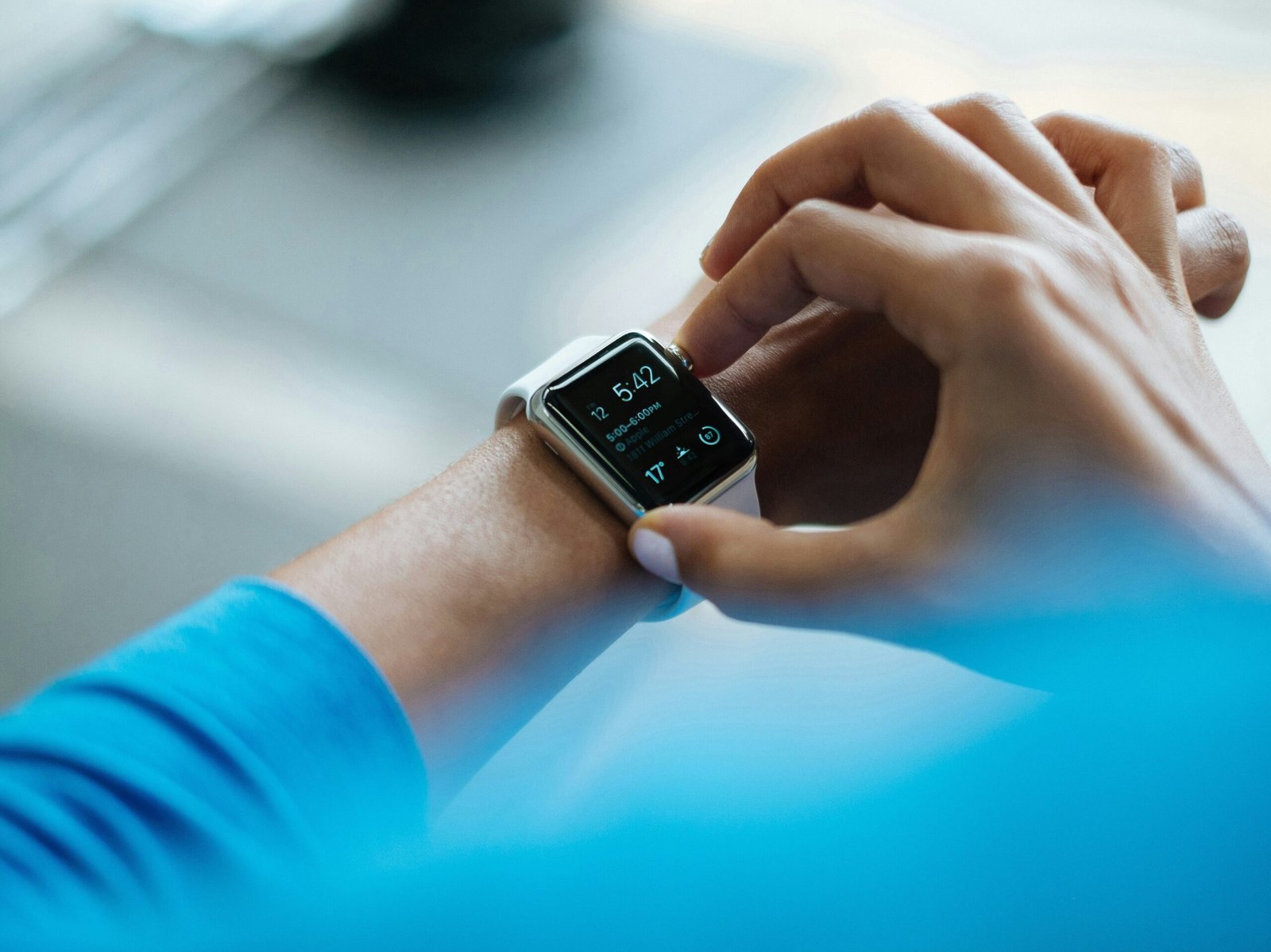
Photo by Luke Chesser on Unsplash
The Asia-Pacific wearable device market reached an estimated USD 49.6 billion in 2024 and is projected to exceed USD 150 billion by 2030, according to Mordor Intelligence’s Asia-Pacific Smart Watch Market analysis. Southeast Asia represents one of the fastest-growing segments within that market, driven by smartphone penetration, rising disposable income, and aggressive product marketing from Apple, Samsung, Xiaomi, and a growing tier of regional brands. Millions of consumers across Singapore, Thailand, Indonesia, Malaysia, and the Philippines now generate continuous streams of heart rate data, sleep architecture metrics, blood oxygen readings, step counts, and activity classifications.
Almost none of this data reaches a clinician. The problem with SEA wearable health data clinical integration is not that the devices are inaccurate or that consumers are uninterested. It is that the infrastructure connecting consumer health data to clinical decision-making barely exists across the region.
The Data Sits on Wrists, Not in Systems
The core disconnect is architectural. Wearable manufacturers design products for consumer engagement. They build dashboards that track trends over time, award badges for consistency, and generate notifications when readings fall outside normal ranges. These features serve the consumer experience. They do not serve clinical workflows.
For wearable health data to influence a treatment decision, it needs to reach the right clinician, in a usable format, at the right moment. In most Southeast Asian healthcare systems, none of these conditions are met. Electronic medical record systems in the region are fragmented. Singapore’s National Electronic Health Record system is relatively advanced by regional standards, yet integration with consumer wearable platforms remains limited. Malaysia, Indonesia, Thailand, and the Philippines operate with far more fragmented health IT infrastructure, where even hospital-to-hospital data sharing is inconsistent.
The result is a growing pool of health-relevant data that lives on consumer devices and proprietary cloud platforms but never enters the clinical record. A patient wearing an Apple Watch that detected an irregular heart rhythm will, in most SEA healthcare settings, need to show their phone screen to a doctor and hope the doctor knows how to interpret what they are seeing. This is not a clinical integration pathway. It is an anecdote with a timestamp.
Why Consumers Collect Data They Cannot Use
Consumer motivations for wearing health devices are well documented. Fitness tracking, sleep monitoring, and general wellness awareness are the primary drivers, particularly among the under-35 demographic that accounts for over 66 percent of wearable users across Asia-Pacific. The health data is a byproduct of the consumer proposition, not the primary purchase reason for most users.
This matters because consumers who buy a wearable for fitness tracking often do not know what to do with the health data it generates. A resting heart rate trend, a blood oxygen variability pattern, or a sleep stage distribution is meaningless without clinical context. As explored in our analysis of why Singapore professionals underinvest in preventive health despite high awareness, health data without a decision framework does not change behaviour. It generates anxiety or, more commonly, indifference.
The wearable industry’s response has been to add more metrics rather than to make existing metrics more clinically actionable. Devices now measure skin temperature variation, respiratory rate estimation, and stress indices derived from heart rate variability. Each new metric adds to the data volume without addressing the fundamental question of what the consumer is supposed to do with the information.
The Employer Opportunity That Remains Untapped
Corporate wellness programmes across Southeast Asia represent the most logical integration point for wearable health data, and the one where the least progress has been made. Employers have both the incentive and the infrastructure to bridge the gap between consumer data collection and clinical utility. A company that subsidises wearable devices for employees and connects the data stream to an occupational health provider creates a closed loop that benefits the individual, the employer, and the healthcare system.
As examined in our analysis of how SEA employers continue to treat mental health as a welfare consideration rather than a systems investment, most corporate health programmes in the region remain superficial. Annual health screenings, gym membership subsidies, and wellness app subscriptions are common. Structured integration of wearable data into employee health management is rare.
The exceptions are instructive. Several multinational companies operating in Singapore have piloted programmes that aggregate anonymised wearable data to identify workforce health patterns, flag individuals at elevated cardiovascular risk, and route them to early clinical intervention. These programmes have shown measurable reductions in downstream healthcare claims. They remain pilot-scale because scaling requires data governance frameworks, employee consent architecture, and clinical partnerships that most employers in the region have not built.
What Integration Would Actually Require
The first is interoperability standards. Consumer wearable platforms need to export data in formats that electronic medical record systems can ingest. This is a standards problem more than a technology problem. Apple HealthKit and Google Health Connect provide data portability frameworks, but the receiving end of the pipeline, the EMR systems used by hospitals and clinics across SEA, is not equipped to accept or display the incoming data in a clinically useful way. The Straits Research wearable healthcare devices market analysis projects double-digit growth through the decade, but that growth is measured in unit sales and revenue, not in clinical integration metrics. The industry tracks devices shipped, not data acted upon.
The second is clinical workflow design. A general practitioner managing a panel of 2,000 patients cannot review continuous wearable data streams for every patient. Clinical integration requires algorithmic triage: automated systems that flag abnormal patterns and surface them to clinicians at the point of care, with sufficient context to inform a decision. This capability exists in prototype form in research settings but is not deployed at any meaningful scale in SEA primary care.
The third is regulatory clarity. Health data generated by consumer wearable devices occupies an ambiguous regulatory space across the region. In Singapore, the Health Sciences Authority regulates medical devices but consumer wearables fall largely outside that framework. In most other SEA markets, the regulatory treatment of consumer health data is even less defined. Without clear rules on data handling, liability, and clinical admissibility, healthcare providers have little incentive to integrate wearable data into formal care pathways.
The Structural Gap
Southeast Asia’s ageing population, as documented in our analysis of the longevity economy across the region, will generate escalating demand for chronic disease monitoring and early intervention over the next two decades. Consumer wearable devices already generate much of the data that could support this monitoring at scale and at low marginal cost. The technology exists. The consumer adoption is well underway.
What does not exist is the connective tissue between data generation and clinical action. Until that tissue is built, through interoperability standards, clinical workflow integration, and regulatory clarity, wearable health data in Southeast Asia will remain what it is today: a consumer engagement feature that generates a large volume of health-relevant information and delivers almost none of it to anyone who can act on it.