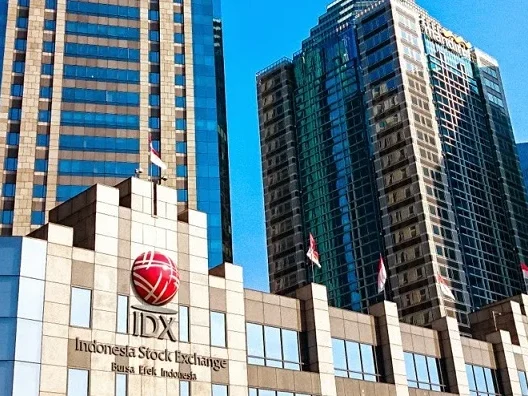
The Indonesia Stock Exchange sits in an unusual position within the emerging market equity landscape. Indonesia’s economy is the largest in Southeast Asia and the seventh-largest in the world by nominal GDP, according to IMF data. Its population of approximately 280 million, average age of 30, and rising middle class make it one of the most compelling long-term consumption growth stories in the world. And yet the IDX is consistently underrepresented in EM equity allocations relative to what Indonesia’s economic weight would imply.
MSCI Indonesia comprises approximately 2.1 percent of the MSCI Emerging Markets Index as of early 2026 — a share that has been roughly flat for several years despite Indonesia’s economy growing in both absolute terms and relative to other EM constituents. For context, India’s weight in MSCI EM is approximately 20 percent. Brazil’s is around 5 percent. The disconnect between Indonesia’s economic scale and its capital market representation is not an oversight. It reflects a set of structural market characteristics that global allocators have consistently applied as discount factors.
Distinguishing between the discount factors that are structural and largely permanent and those that are improving and potentially reversible is where the analytical value sits.
Why the IDX Stays Underweighted in EM Portfolios
The IDX’s persistent underweighting in EM portfolios traces to four characteristics that global institutional investors consistently cite in market assessments.
The first is liquidity. The IDX has a relatively small free-float market capitalisation relative to its total market cap, because a significant proportion of shares in listed Indonesian companies are held by controlling shareholders — founding families, government-linked entities, and strategic investors — who do not actively trade their positions. The World Bank’s capital market development review of Indonesia has documented the free-float constraint as a persistent feature of the market structure that limits the capacity of large institutional investors to build and exit positions without moving the market against themselves. For a pension fund or sovereign wealth fund building a position of USD 100 million or more in Indonesian equities, the liquidity constraint is material and not easily resolved.
The second is corporate governance. Indonesia has made progress on governance standards over the past decade, and the Indonesia Financial Services Authority (OJK) has increased disclosure requirements and enforcement activity. But the incidence of related-party transactions, opaque ownership structures, and board composition that does not provide meaningful independent oversight remains higher than comparable markets in Malaysia, Singapore, or Thailand. The governance risk is not hypothetical. There have been enough high-profile corporate failures and minority shareholder disappointments to establish a track record that global investors price into their required returns.
The third is currency volatility. The Indonesian rupiah is more volatile than most comparable EM currencies, reflecting Indonesia’s commodity export dependence, its current account sensitivity, and periodic episodes of capital outflow pressure that drive sharp IDR depreciation. Bloomberg’s currency data shows the IDR/USD range over the past five years spanning from approximately 13,500 to 16,800 — a range wide enough that currency translation effects can overwhelm equity returns for USD-denominated investors in either direction.
The fourth is sectoral concentration. The IDX is heavily weighted toward financial services, commodities, and consumer staples — sectors that reflect Indonesia’s economic structure but do not offer the technology and high-growth exposure that drives much of the EM inflow into India and Taiwan. An EM portfolio manager whose benchmark is influenced by the growth-oriented tilt of global EM indices has limited reason to overweight Indonesian financials and commodity companies unless the valuation case is compelling enough to offset the governance and liquidity discounts.
What Is Improving in Indonesia’s Capital Markets
Against the structural discount factors, there are genuine improvements in the IDX’s investment profile that justify the “potentially reversible” framing for some of the underweighting.
The most meaningful is the continued expansion of the Indonesian retail investor base. OJK data shows Indonesian retail investment accounts growing from approximately 1.7 million in 2019 to over 13 million by end-2024, a seven-fold increase driven largely by mobile-first investment platforms including Ajaib, Bibit, and Stockbit. This expansion in domestic investor participation has improved intraday liquidity in the more actively traded large-cap names and has created a domestic demand floor that partially offsets the foreign capital flow volatility that has historically driven IDX correction cycles.
The second improvement is the deepening of the IDX’s own technology and consumer sector representation. The merged entity of Gojek and Tokopedia, GoTo Group, and Bank Jago, backed by GoTo, represent a new layer of digital economy exposure within the IDX that did not exist five years ago. Their performance has been mixed and the path to sustainable profitability has been longer than the IPO narratives implied, but their presence changes the sectoral composition of the market in a direction that is more aligned with the growth-oriented framing that EM allocators seek.
The Valuation Case and What Would Change It
The case for Indonesian equities in 2026 ultimately rests on whether the valuation discount relative to comparable EM markets adequately compensates for the structural risks. The IDX Composite’s trailing P/E ratio has been trading in the 13 to 16 times range, below the MSCI EM average and significantly below India’s market valuation, which has commanded a substantial quality premium. Indonesian banking stocks, which dominate the index, are trading at price-to-book ratios that look inexpensive relative to their return-on-equity profiles.
The valuation case is real. It has also been real for several consecutive years without catalysing the rerating that would close the discount. The missing catalyst is not primarily an analytical one — it is a combination of governance confidence, liquidity improvement, and a sustained period of political and macro stability that would allow global allocators to increase Indonesian exposure without concern about exit risk.
For Singapore-based family offices, regional fund managers, and individual investors with genuine tolerance for the liquidity constraints, the valuation case is more accessible than it is for the global institutional investors whose position size would be constrained by the free-float issue. The IDX is not for every portfolio. For those who understand what they are taking on, and who are sizing accordingly, the discount has historically been a compensated one.
For the broader SEA market context — including the gravity shift from Hong Kong to Singapore and what it means for regional capital — see our Hong Kong to Singapore capital shift analysis. For how family offices in Singapore are currently thinking about SEA equity exposure, see our family office repositioning piece.