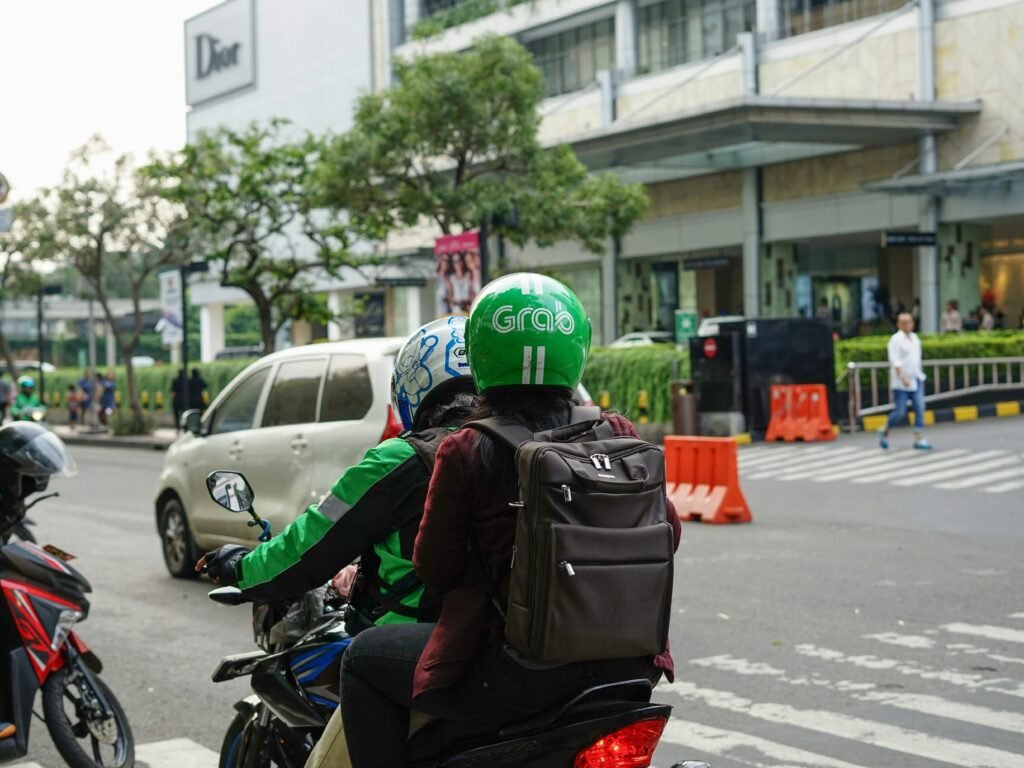
Singapore has the infrastructure. It has the capital, the talent density, the regulatory clarity, and the institutional backing for innovation that most regional cities would trade a decade of GDP growth for. And yet the companies that fundamentally redefined how Southeast Asians move, pay, eat, and shop (Gojek, Grab in its original form, and Sea’s Shopee) did not emerge from Singapore’s innovation infrastructure. They emerged from the cracks in everyone else’s.
The pattern is structural rather than accidental or historical. It is still running, still producing companies, and still being systematically misread by the investors, policymakers, and media narratives that spend the most time in Singapore.
Why Market Gaps Drive Better Startups Than Infrastructure in SEA
The best innovation in tech markets emerges not from the most resourced environments but from those where the gap between a problem’s scale and the quality of existing solutions is largest, and where customers will adopt an imperfect new product because the alternative is nothing. The romanticised version of this argument is that hardship breeds creativity. That framing is both true and useless as a framework for understanding the pattern.
Jakarta is a city of thirty-three million people in a metropolitan area where public transport was historically dysfunctional, road infrastructure was overwhelmed, and the formal workforce had limited access to financial services. When Gojek launched as a motorcycle taxi booking service in 2010, it was not a technologically sophisticated product. The sophistication was in recognising that the problem (urban mobility in a dense, motorbike-dominant, infrastructure-poor megacity) was enormous, urgent, and entirely unaddressed by anything resembling a formal solution. The customer base was enormous, the pain was daily, and the barrier to adopting even a rudimentary digital solution was low because the alternative was standing on a street corner negotiating with an ojek driver and hoping for a fair price.
Singapore does not have that problem. Singapore has Grab, MRT, and efficient taxi regulation. The friction that created the conditions for Gojek’s emergence is absent because Singapore solved its urban mobility problem decades ago through infrastructure investment that made the problem invisible. You cannot disrupt a problem that doesn’t exist.
Where the Constraint-Driven Innovation Pattern Is Running in 2026
The same dynamic is operating in several verticals across SEA in 2025 and 2026, and the companies capturing it are based in Jakarta, Manila, Ho Chi Minh City, and Yangon, not Singapore.
In financial services, the most interesting credit innovation in Southeast Asia is happening in markets where the formal banking system has historically excluded the majority of the population. In the Philippines, roughly thirty percent of adults remain unbanked according to Bangko Sentral ng Pilipinas financial inclusion survey data. The consequence is that a substantial portion of the working population handles wages in cash, borrows from informal lenders at usurious rates, and has no credit history that formal institutions can assess. This creates a genuine market for alternative credit scoring, digital disbursement, and mobile-first financial products that does not exist in the same form in Singapore, where financial inclusion is effectively complete. The companies building the most structurally interesting solutions to this problem are Manila-based. They are not headline names yet. They will be.
In logistics, the problem of last-mile delivery to Indonesia’s 17,000 islands is a constraint that has produced a genuinely unusual set of solutions: multi-modal routing systems, village-level agent networks, and cold-chain workarounds for islands without reliable refrigeration infrastructure. The complexity of the problem forces an operational creativity that flat urban delivery markets do not require. Singapore-based logistics companies that have tried to import their playbooks into the Indonesian archipelago have consistently discovered that the models don’t transfer. The models that work were built inside the constraint.
In agriculture, Vietnam and Indonesia both have enormous smallholder farming sectors with persistent problems around market access, price information asymmetry, and supply chain fragmentation. The companies building agtech solutions in these markets build from the constraint up rather than applying Silicon Valley or Singapore-developed technology to a local problem, starting with what smallholder farmers can actually access, afford, and use. The products look nothing like Western agtech, and they shouldn’t.
Why Singapore Keeps Misreading the Constraint-Driven Pattern
The Singapore tech ecosystem is structurally optimised for a different kind of company than the ones just described. Singapore-based VCs have check sizes, diligence processes, and return expectations calibrated to companies that can scale across multiple markets quickly, produce clean financial reporting, and follow governance norms that institutional LPs in the US and Europe are comfortable with. These are not bad criteria. They are just poorly matched to the earliest stages of constraint-driven innovation.
A Manila-based founder building alternative credit infrastructure for unbanked Filipinos will produce messy unit economics in an informal market that a Singapore-based analyst will struggle to benchmark against anything comparable — not audited financials at seed stage. The product will look rudimentary. The team will have non-traditional backgrounds. The exit path will be unclear. The investor who backs this company at seed stage is making a bet on the scale of the problem and the founder’s proximity to it, not on the cleanness of the deck.
Singapore has exported enormous amounts of capital into SEA venture in the past decade. Very little of it has gone to the companies at this formation stage, in this type of market. The returns that have been captured instead are from companies that were already post-product-market fit, post-Series A, and building in markets where the investment process felt familiar. That is a legitimate strategy. It is not the same as catching the constraint-driven innovation at the point of emergence.
What This Means for Founders and Investors Backing in SEA
The founders most likely to build category-defining companies in SEA over the next decade are not the ones who graduated from NUS, worked at a Singapore-based corporate, and raised a seed round from a local VC using a Silicon Valley pitch deck template. That path produces real businesses (good businesses, often) but it rarely produces the kind of structural disruption that redefines a category.
The companies to watch are being built by founders who grew up with the problem, who cannot afford to wait for better infrastructure, and who are building in markets that Singapore-based capital has historically been too slow or too uncertain to back at the right stage.
For the capital market context behind which SEA tech companies are raising and from where, see our Q1 2026 SEA tech funding analysis.
Sources: