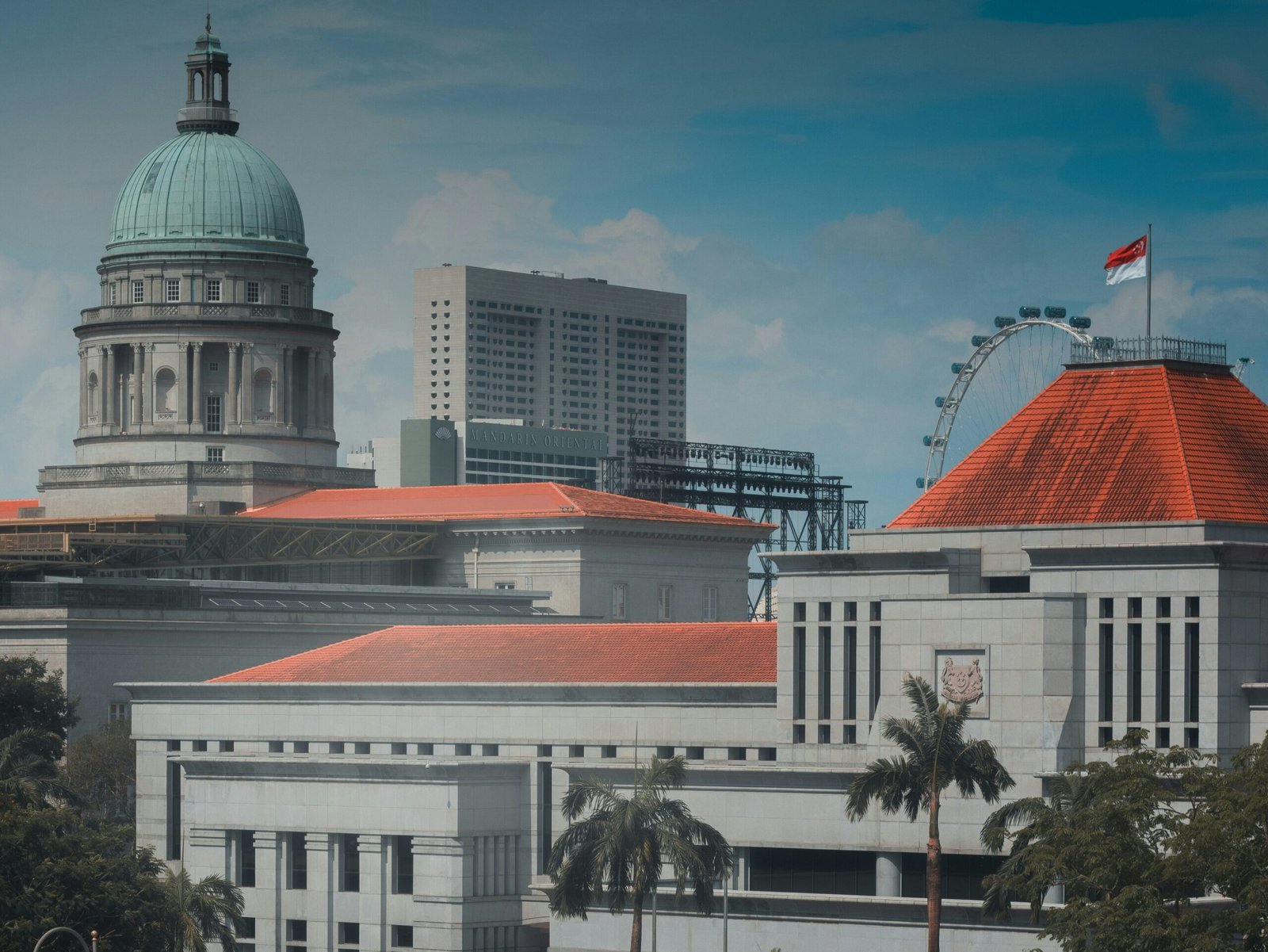
Photo by Xuedi Liu on Unsplash
Every Southeast Asian government now has an AI strategy. Singapore published National AI Strategy 2.0 in December 2023. Indonesia has its National AI Strategy through BRIN and the Ministry of Communication and Digital. Malaysia launched its National AI Roadmap. Thailand has its AI Strategy through NECTEC. The Philippines has an AI Roadmap through DICT.
The strategy documents are real. The government AI strategy Southeast Asia 2026 conversation has moved past the question of whether governments are taking AI seriously. The question that actually matters for builders, investors, and operators is which governments have built the institutional infrastructure to execute their strategies, and which have produced a document without the organizational backing to make it operational.
That distinction matters enormously for how enterprise AI deployment patterns will evolve across the region, which markets will attract AI research and development investment, and which regulatory environments will create defensible advantages for the businesses operating within them.
The Three-Part Infrastructure Test
A government AI strategy is only as effective as the infrastructure supporting it. The infrastructure has three components that compound when aligned and cancel each other out when misaligned.
The first is budget allocation with continuity. AI capability at the national level requires sustained investment in compute infrastructure, research grants, talent development, and regulatory capacity. A one-time budget allocation followed by a funding freeze produces a strategy document and not much else. Singapore’s AI strategy is backed by sustained, multi-year commitments across the National Research Foundation, the AI Singapore programme, and sectoral deployment budgets within MAS, MOH, and the Ministry of Manpower. The numbers are not primarily about compute infrastructure. They are about the institutional continuity that prevents strategy from being a political document with a three-year shelf life.
The second component is talent pipeline alignment. A national AI strategy that outpaces the country’s ability to produce, retain, and deploy AI talent is a demand document without a supply side. Singapore benefits from a talent pipeline built across NUS, NTU, and SMU with deliberately expanded AI research capacity, combined with an immigration framework that actively recruits international AI researchers and engineers. The gap between Singapore and the rest of SEA on this dimension is widening, not narrowing. Indonesia’s AI talent pool is growing faster than any other SEA country in absolute terms, but it is also experiencing significant emigration of its most capable researchers to Singapore, the US, and Canada. Malaysia faces a similar talent export dynamic.
The third component is a regulatory framework that enables rather than paralyzes deployment. Singapore’s Model AI Governance Framework and the MAS sectoral guidelines create a compliance pathway for enterprise AI deployment that reduces regulatory ambiguity without prohibiting innovation. A clear compliance pathway matters more than many founders and operators acknowledge. When a regulated financial institution or healthcare provider can understand what governance obligations AI deployment creates, they can build those obligations into their product and process design from the start. When the regulatory environment is ambiguous, cautious institutions wait. The waiting compounds into a deployment gap.
How the Other Strategies Actually Land
Indonesia’s national AI strategy has genuine ambition and one structural challenge that is not easily solved at the policy level. The archipelagic geography, linguistic diversity, and federal regulatory complexity that characterize Indonesia create a very different deployment context than Singapore’s city-state uniformity. A government AI initiative that works in Jakarta does not automatically propagate across 17,000 islands and dozens of regional regulatory environments. Indonesia’s AI strategy is most effectively read as a Jakarta-centric initiative that will produce results in the capital and in the major Javanese cities before it produces results nationally. That is not a criticism. It is a description of the implementation reality, and it affects which Indonesian AI opportunities are actually executable at scale.
Malaysia’s AI Roadmap has benefited from meaningful investment in compute infrastructure, partly through Hyperscaler data center commitments in Johor and Kuala Lumpur that create physical infrastructure for cloud AI deployment. The constraint is execution bandwidth within government agencies. Malaysia’s digital government transformation projects have a documented history of procurement cycles that add 18 to 24 months to the deployment timeline even for straightforward technology implementations. AI projects that require organizational redesign alongside technology deployment face even longer cycles. The platform dependency analysis on this site covers the Hyperscaler infrastructure buildout in Malaysia in context.
Thailand’s AI strategy sits within a government structure where technology ministry mandates change regularly with cabinet reshuffles and where the gap between strategy announcement and budget appropriation can be years long. The NECTEC and NSTDA research programs produce genuine technical capability, particularly in computer vision and Thai-language NLP. The translation of that research capability into enterprise deployment or government process transformation is the weak link.
What Builders Should Actually Take From This
For founders and operators building AI products with a Southeast Asian distribution strategy, the government AI strategy comparison is not primarily useful for its political content. It is useful for what it signals about enterprise procurement patterns and regulatory risk.
A regulated enterprise in Singapore operating under MAS guidelines is already trained to ask the right questions about AI deployment. They know what an explainability requirement means. They know what data governance obligations look like. They have a procurement pathway for AI vendors that, while still slow, has fewer fundamental knowledge gaps than an equivalent enterprise in a market where AI governance is still being invented. Selling enterprise AI in Singapore is hard. The buyer is sophisticated and demanding. But the buyer is real.
A regulated enterprise in a market where AI governance is still being defined is navigating two problems simultaneously. They are evaluating the technology and also trying to anticipate what compliance will look like when it arrives. The cautious ones wait. The bold ones deploy and assume they will adapt. Neither posture produces the procurement confidence that a clear regulatory framework creates.
The AI implementation gap between SEA enterprises is partly a function of this regulatory environment difference. Where compliance pathways are clear, adoption accelerates. Where they are ambiguous, caution functions as a default that benefits incumbents and disadvantages new deployments.
The Compounding Nature of the Lead
Singapore’s government AI strategy advantage is compounding in a way that makes it structurally durable rather than temporarily larger. Each enterprise that deploys AI at the structural level creates organizational knowledge about what works and what breaks. Each regulator that develops genuine technical understanding of AI systems is better equipped to write the next iteration of guidance. Each researcher who stays in Singapore rather than emigrating adds to the talent density that attracts the next researcher.
None of this is insurmountable for the other SEA markets over a 10 to 15 year horizon. Indonesia’s talent pipeline, Malaysia’s infrastructure investment, and Thailand’s research base are all real assets that can compound. The observation is about where the compounding is happening most rapidly right now, and what that means for the markets in which enterprise AI adoption will produce deployable results at scale within a three to five year window.
Within that window, Singapore’s institutional alignment across budget, talent, and regulation produces a structural advantage that matters for builders, investors, and enterprises making deployment decisions today. The rest of SEA will develop comparable infrastructure. The timeline on that development is what separates a market worth entering now from a market worth watching.