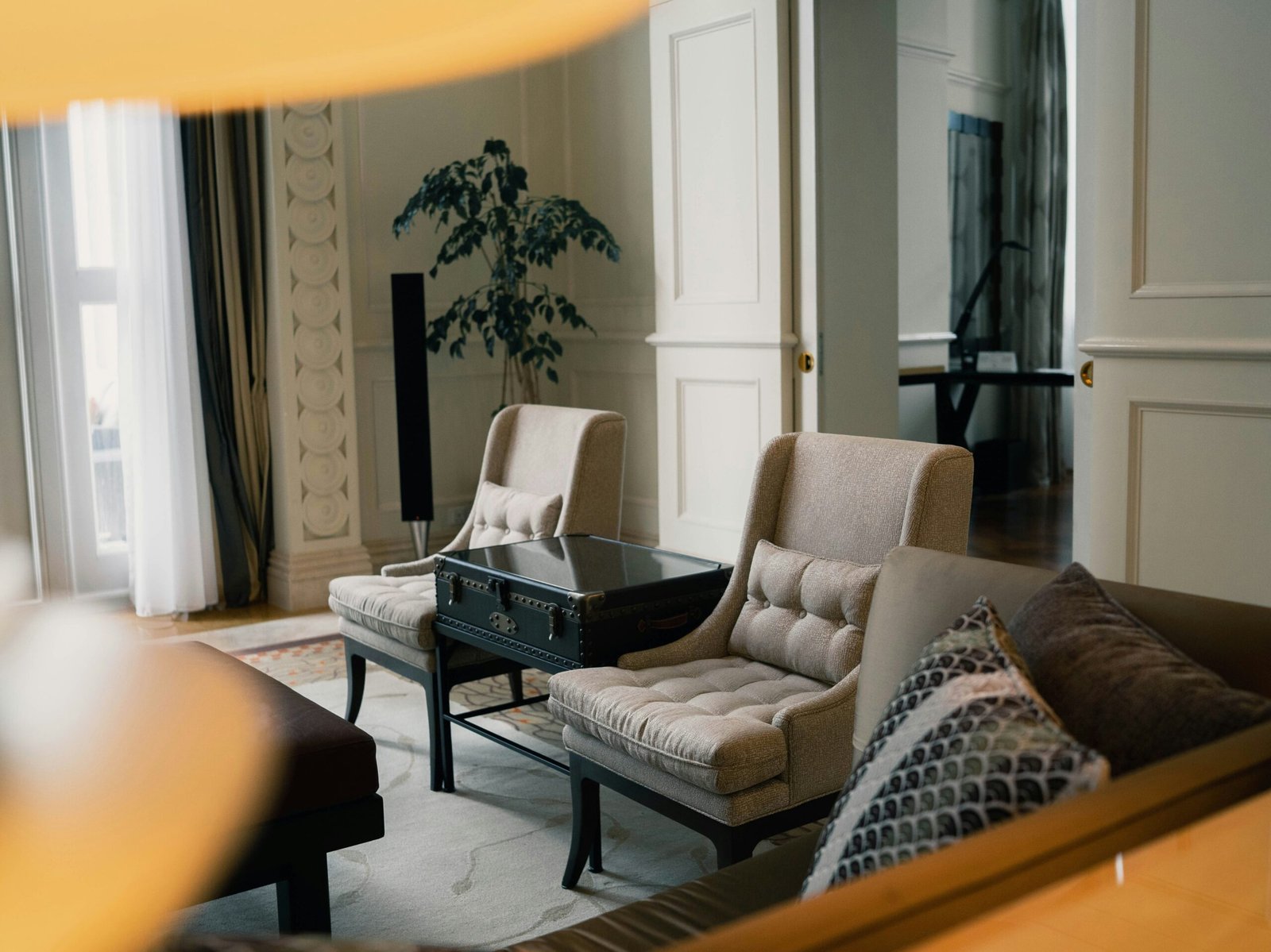
Premium interior design in SEA has climbed visibly across Singapore, Bangkok, and Manila over the past five years. Custom millwork, architect-led layouts, integrated lighting, and material specifications that used to live in commercial fit-out are now standard in residential briefs at the top of the market. The numbers themselves matter less than what the spending pattern reveals about how high-income households now think about home.
The shift is not, for the most part, aesthetic. It is structural. The premium home has stopped being the address you collect and started being the daily environment you actually use. That reframing is what the spend is about.
From Acquisition to Curation
A decade ago, the premium home market in Southeast Asia was driven by address. Owning the right postcode, owning more than one property, accumulating real estate as a primary wealth-building mechanic. Interiors mattered less because the building itself was the asset.
That logic has shifted, particularly among professionals aged 30 to 50 with high incomes and significant time spent abroad. Property ownership is no longer the constraint for this group. Time and rest are. The question has moved from “do I own a home in a good location” to “does the home I already own actually work for the life I want to live.”
This is what drives the SGD 150,000 to 400,000 interior renovation that does not show up cleanly in any property valuation model. The owner is not optimising for resale. They are optimising for the next ten years of mornings, dinners, and weekends in a space that either supports the life they want or quietly works against it. Knight Frank’s Asia-Pacific reading of luxury residential demand lands on a similar conclusion: the buyer profile is increasingly wealth-mature, mobile, and discerning, and the spec is moving with them.
What the Trends Are Actually Saying
The interior trends with traction at the premium end of the SEA market read as comfort and function decisions rather than aesthetic ones.
Closed-off rooms are back. Open-plan living, which dominated five years of design press, is being walked back at the top of the market. Buyers want zoned spaces. A study that closes. A bedroom that does not share acoustics with the living room. A kitchen that can be ignored when the household is hosting. The reasoning is practical. Working from home is permanent for many of them, multi-generational living is more common than the design press admits, and the cognitive cost of a space with no separation has become tangible.
Natural materials and quieter palettes are winning. Raw timber, exposed stone, natural light, and simple geometry are pushing past ornament and saturation. This is partly a response to the same global aesthetic shift, partly a recognition that visually busy environments are tiring to live inside.
Functional ergonomics is showing up in the brief. Kitchens are being redesigned for the actual labour of cooking rather than for entertaining. Seating is being specified for hours of use, not photographs. Storage is planned obsessively because the friction of a disorganised home is felt every day.
The home office is now a permanent design category, not a pandemic accommodation. Acoustic separation, daylight, ergonomics, and a wired connection point are non-negotiable rather than aspirational.
McKinsey’s longer-running work on consumer preference points the same direction: spend is shifting toward wellness, longevity, and the daily-environment categories that compound over years, not toward visible status objects.
The Buyer Profile Driving the Spend
The professionals doing this spending are not a single archetype. They include regional executives, founders with successful exits, fund managers and senior investors, and partners in specialised firms. What unites them is income stability beyond the question of “can I afford this house” and exposure to multiple cities.
This last factor matters more than it gets credit for. Living in three cities across a decade gives someone a clear opinion about what works. They are not buying a designer’s vision. They are commissioning a brief.
For the design industry serving them, this changes the job. The designer who can listen to how a household actually uses its time and translate that into a brief now outperforms the one selling a recognisable style. The same shift is visible in the Knight Frank framing of how high-net-worth capital is moving across SEA luxury housing, where buyer sophistication is rising faster than supply quality at the top of the market.
Wealth, Display, and What the Spend Signals
Premium interior design spending is also a quiet vote on what wealth is for at this stage of the SEA cycle.
Owning a third or fourth investment property used to be the obvious next move. For many of the buyers driving this design spend, it is no longer the obvious move. Discretionary capital is going into the daily environment instead. That decision is rational on its own terms. A renovation used ten times a day for fifteen years compounds quality of life in a way an additional rental unit, which mostly produces tax forms, does not.
It also signals a generational pivot away from outward display. The previous premium home was meant to impress others. The emerging premium home is meant to support the inhabitant. Bain and McKinsey both track the broader shift, with Bain’s reading of a global luxury market where experience is taking share from goods lining up with what is visible in residential renovation budgets across SEA.
If discretionary income is being allocated to environment quality rather than to accumulation, the consequences ripple outward. Premium experience categories, better food, better travel, better health, and better workspaces, are likely to grow relative to luxury goods and incremental real-estate accumulation. Deloitte’s regional consumer practice has been tracking the same redirection of household spend across SEA, particularly among households at and above median income in the major cities.
The Practical Test for Buyers
For buyers spending at this level, the discipline is to keep the brief honest. The renovation budget should answer specific questions. Where do I lose time? Where do I lose energy? What do I want the space to be quiet about, and what do I want it to do well?
The same financial framing that makes the case for putting renovation into a proper financial model rather than a wishlist applies even more sharply at the premium end, where individual line items can run into six figures. The fit-out should map to the years it will be used. The material specification should map to the climate. The design language should hold up to actual living, not to an opening photo.
This is also where the upstream property decision matters. If the property itself does not justify the design ambition, the renovation will out-spec the asset. The earlier work on what owning a Singapore home actually costs once you stop counting only the purchase price sits naturally next to any premium interior brief.
What the Market Is Becoming
The interior design market in Southeast Asia is maturing from a model driven by aspirational aesthetics into one driven by functional intelligence. That is a better market for everyone. For designers, because the work has more substance. For manufacturers, because durability and performance start to matter again. For homeowners, because the deliverable is a home that works.
The spend itself is not the story. What it tells you about how a generation of high-income SEA professionals now thinks about home is. They have stopped buying the magazine version. They are commissioning the version that actually fits the life they are trying to live in it.