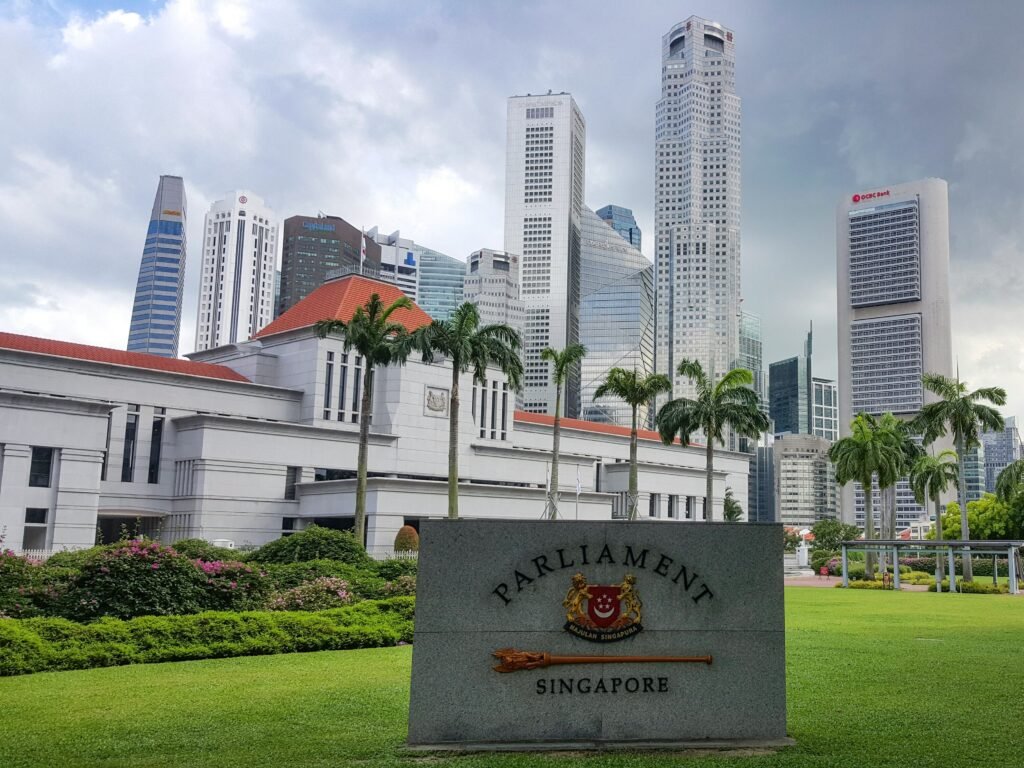
Singapore’s family office ecosystem reached approximately 1,650 registered single family offices by the end of 2023, according to the Monetary Authority of Singapore’s published data. Total assets under management across this population exceeded US$5 trillion by the time the sector’s growth trajectory began attracting policy attention in 2024. The headline numbers have remained impressive through the first quarter of 2026.
What the headline AUM figure does not reveal is the internal reallocation happening within that capital base. Aggregate AUM growth can mask significant sector rotation, geographic exposure reduction, and duration shortening — all of which are more relevant to understanding where sophisticated capital sees risk than the top-line number. In mid-2026, the more informative question is not how large Singapore’s family office sector has become but what the allocation shift within it is signalling about the macro environment these offices are pricing in.
The Macro Trigger Summary
Three structural forces are driving portfolio repositioning across Singapore’s family office ecosystem in 2026. They are not independent, and they are interacting in ways that compound their effect on allocation decisions.
The first is the persistence of US trade policy uncertainty. The tariff regime introduced in early 2026 has created a structural shift in how globally oriented family offices are thinking about supply chain exposure and earnings predictability in their equity portfolios. The effect is not primarily on Singapore-listed companies, which have limited manufacturing exposure, but on the US equity positions that most family offices hold as a core allocation. The Monetary Authority of Singapore’s April 2026 quarterly monetary policy statement noted the downside risks to global growth from elevated trade policy uncertainty. Family offices are not waiting for that uncertainty to resolve before adjusting exposure.
The second force is China’s sustained deflation dynamic and the ongoing recalibration of growth expectations for the mainland economy. Family offices with significant China private equity or venture positions — a category that expanded substantially during the 2018 to 2022 inflow period — have been working through extended holding periods and difficult exit environments. The offshore yuan’s structural depreciation pressure and the divergence between China’s policy rate environment and the US rate cycle have created currency and return headwinds that are affecting realised returns on positions that were entered at peak valuations. New commitments to China-focused vehicles have slowed materially.
The third force is the repricing of alternative assets in a persistently higher-rate environment. Private credit, infrastructure, and real asset positions that were underwritten at assumed rates of two to three percent carry a fundamentally different risk-return profile in an environment where the Singapore 10-year government bond yield sits at levels that provide genuine competition for risk-adjusted return. This is not a crisis, but it is a recalibration, and it is visible in the extended holding periods for private equity secondaries and the increased selectivity in new infrastructure commitments.
Exposure Mapping: Where the Vulnerabilities Are Concentrated
The family offices most exposed to the current macro environment are those with concentrated positions in three specific areas: China-focused private equity and venture capital, US growth equity at elevated entry multiples, and long-duration private credit underwritten at historically low rates.
China-focused private equity exposure built up between 2018 and 2022 was underwritten against a growth trajectory that the subsequent regulatory cycle interrupted. The consumer internet, edtech, and mobility sectors that attracted significant capital during that period have produced mark-to-market losses for many family offices holding these positions, and the secondary market for China PE stakes remains illiquid at valuations sellers are willing to accept. Family offices that concentrated exposure in this vintage are now working through a significant capital efficiency drag that affects their ability to deploy into new opportunities.
US growth equity positions entered at 2021 peak valuations have recovered partially but unevenly. Family offices that used public market equivalents as their benchmark have seen underperformance against that benchmark for extended periods, and the repricing of growth company multiples in a higher-rate environment has been structurally more severe than the headline index recovery suggests, because the index recovery has been concentrated in a small number of large-cap technology companies that many family offices do not hold at the weights required to capture that performance.
The long-duration private credit exposure is the least visible but potentially the most consequential vulnerability. Credit structures originated in the 2020 to 2022 period at floating rates pegged to LIBOR or SOFR have effectively repriced upward as rates moved, which initially improved income but has also increased default probability for borrowers in rate-sensitive sectors. Family offices with significant exposure to real estate private credit, leveraged buyout debt, or direct lending to mid-market companies are monitoring credit quality closely, and several have reduced new commitments to these strategies while working through existing books.
How Singapore Family Offices Are Repositioning
The repositioning is not uniform, and it does not follow a single thesis. Across conversations with the Singapore family office ecosystem in early 2026, several patterns emerge with sufficient consistency to be characterised as signals rather than idiosyncratic choices.
The first is a reduction in public equity concentration and an increase in geographic diversification within equity allocations. Family offices that had concentrated 40 to 50 percent of their public equity in US large-cap growth are reducing that concentration in favour of broader diversification across Southeast Asian equities, Japanese equities, and select European industrials. This is not a wholesale exit from US equity — the US market remains the deepest and most liquid large-cap equity market in the world — but a recognition that the concentration premium that US large-cap growth commanded for a decade has become a concentration risk in the current environment.
The second pattern is increased allocation to physical gold and other hard asset stores of value. Gold has historically served family offices as a hedge against both currency debasement and geopolitical tail risk, and both of those drivers are present in 2026. The World Gold Council’s Q1 2026 Demand Trends report documented continued central bank gold accumulation globally, particularly among emerging market central banks, which provides a structural demand floor that family offices are treating as a medium-term support. The allocation is typically modest — five to eight percent of the portfolio — but the direction of change is consistent.
The third pattern is a shortening of duration across fixed income and private credit allocations. Family offices that were extending duration in 2020 and 2021 to capture higher yields in a low-rate environment are now preferring shorter-duration instruments — Singapore Treasury Bills, one to two year government bonds, and floating rate credit — that allow for more frequent reinvestment at prevailing rates. The MAS’s auction data for Singapore Government Securities shows robust demand at recent auctions from non-bank institutional investors, a category that includes family offices operating through Singapore structures.
The fourth pattern is selective increase in Southeast Asian private equity and venture commitments, particularly in sectors with clear structural tailwinds: digital infrastructure, healthcare technology, and the industrial supply chain relocation that US-China trade tensions have accelerated. Singapore-based family offices are positioned to access Southeast Asian deal flow through their regional networks in a way that newly arrived offices from outside the region are not, and this informational edge is being deployed with increased intentionality.
Flight to Safety: What the Capital Posture Reveals
The composite picture of these repositioning moves describes a capital posture that is reducing concentration risk, shortening duration, increasing liquidity, and maintaining but selectively diversifying equity exposure. This is not a panic posture. It is a risk management response to an environment that has more than the usual number of tail scenarios that are difficult to model with confidence.
The Singapore jurisdiction is itself part of the positioning logic. Family offices that established Singapore Variable Capital Company structures through the MAS’s VCC framework benefit from a legal structure that allows multiple sub-funds under a single corporate umbrella, enabling segregation of different asset class exposures within a single regulated framework. The VCC has become a vehicle of choice for family offices that want to maintain Singapore tax residency for their capital while managing diverse geographic exposures, and the take-up rate since 2020 has exceeded MAS’s initial projections.
The Singapore government’s active engagement with the family office sector through the Economic Development Board’s Global Investor Programme and MAS’s regulatory support creates an environment in which the repositioning happening within Singapore’s family offices is also a signal of confidence in Singapore as a jurisdiction rather than just a capital management centre. Family offices that are reducing China exposure and diversifying out of US concentration are frequently adding to Singapore-based structures as the administrative hub for their repositioning, even as the capital itself flows into diverse geographies.
What It Signals for Regional Capital Allocation
The aggregate repositioning of Singapore’s family office ecosystem in 2026 carries institutional signal beyond the individual portfolio decisions it represents. When 1,650 single family offices, collectively holding assets in the multiple trillions, move in consistent directional patterns, those movements become a meaningful input into the regional capital allocation environment.
The reduction in China-focused private commitments compounds the challenge for the China venture and private equity industry, which is already navigating reduced LP appetite from US-based institutional investors subject to regulatory restrictions on China investment. The increase in Southeast Asian private equity commitments provides a marginal but meaningful support for deal activity in a region where capital access remains a constraint for many growth-stage companies.
The preference for shorter-duration fixed income and liquid assets increases the proportion of Singapore family office capital available for rapid redeployment when macro clarity improves. This is not permanently defensive positioning. It is positioning that preserves optionality.
The signal embedded in the current repositioning pattern is not distress. It is discipline — a recalibration toward quality, liquidity, and geographic diversification in response to an environment with more than the usual number of variables that are beyond the direct control of even the most sophisticated capital allocators. Singapore’s family offices are not predicting what comes next. They are ensuring they are positioned to respond to it regardless of which scenario materialises.
For the broader Singapore-Hong Kong capital shift that frames the geopolitical context for family office flows, see our Hong Kong-Singapore capital shift analysis. For the macro-level funding environment that shapes the regional capital ecosystem, see our SEA tech funding Q1 2026 piece.