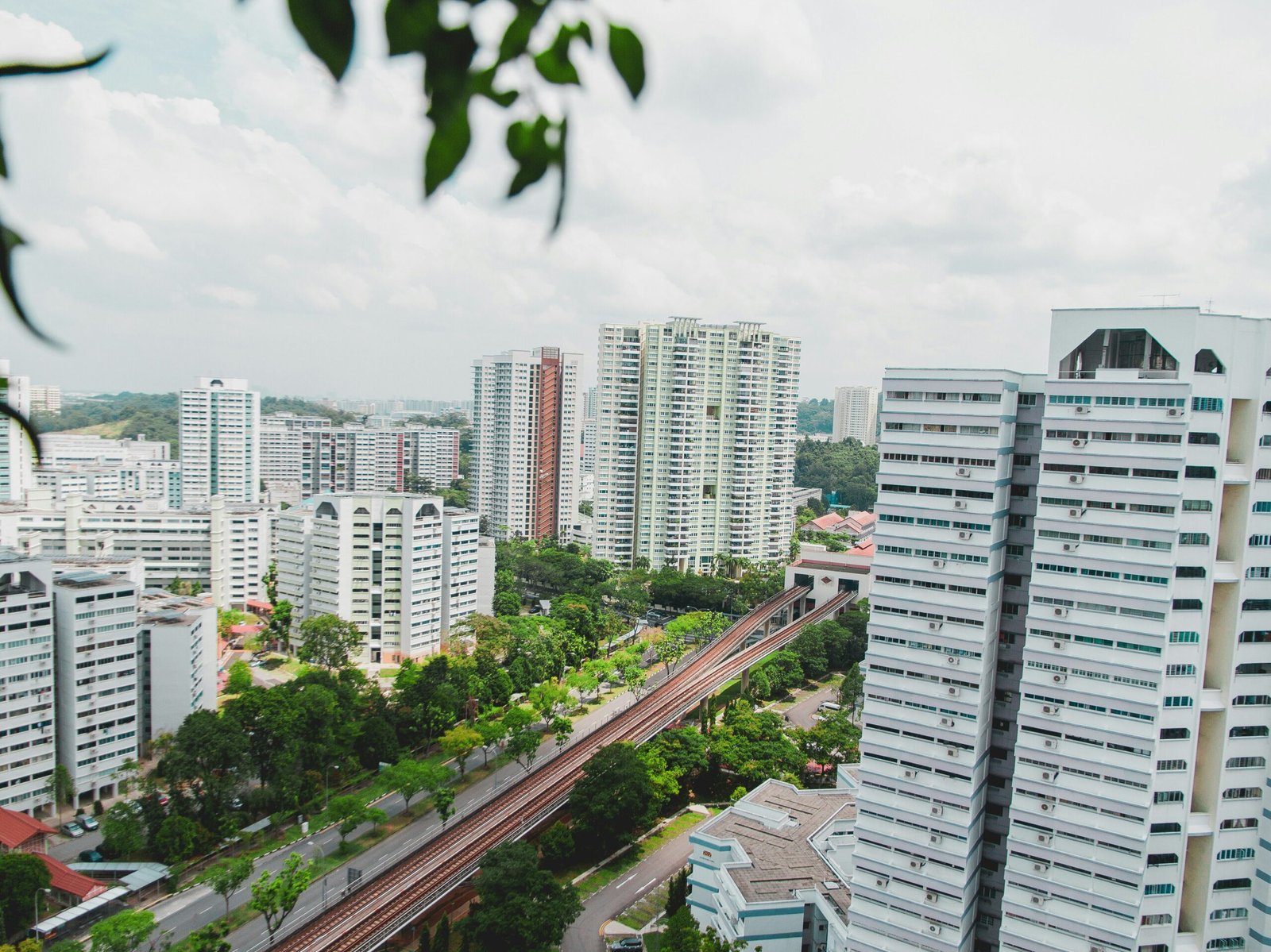
Photo by Benjamin Wong on Unsplash
Through the third quarter of 2025, HDB resale prices had risen for 22 consecutive quarters, the longest such streak on record. The pace of increase slowed to 0.4 percent in Q3 2025, the most modest quarterly gain in nearly five years, but the direction never reversed. A total of 1,594 million-dollar HDB resale transactions were recorded in 2025, roughly 55 percent higher than the previous peak of 1,035 in 2024, according to ERA Singapore’s quarterly market report. The HDB resale price floor structural Singapore residents experience is not a temporary artifact of pandemic-era demand or low interest rates. It is embedded in the architecture of how public housing supply works in this country.
Understanding why this floor exists, and why it is unlikely to give way, requires looking past transaction data and into the supply, policy, and financing mechanisms that determine how HDB flats move through the market.
The Supply Constraint That Sets the Floor
The single most important structural force supporting HDB resale prices is the relationship between Build-to-Order supply and Minimum Occupation Period timing. BTO flats are allocated through a ballot system, with construction timelines running three to five years from application to key collection. Once owners receive their keys, they must occupy the flat for a minimum of five years before they can sell on the resale market.
This creates a supply pipeline with built-in lag. A surge in BTO launches today does not produce resale supply for eight to ten years. Conversely, a period of lower BTO production, such as the construction slowdown triggered by the pandemic in 2020 and 2021, creates a supply thinning that feeds through to the resale market years later.
For 2026, approximately 11,181 three-room and larger flats are reaching their MOP, which ERA forecasts will support resale transaction volumes of 26,000 to 27,000 units. This is a healthy volume, but it enters a market where demand is structurally persistent. New household formation, marriage cohorts seeking their first home, and upgraders moving between flat types all generate baseline demand that does not fluctuate with sentiment the way private property demand does.
The MOP mechanism also creates a secondary price floor effect. Owners who purchased their BTO at subsidised prices and have waited five years to sell are rarely willing to accept a price below what they perceive as fair market value. The waiting period creates a psychological and financial attachment to the asset that discourages selling at distressed prices except under genuine financial hardship.
CPF Financing Reinforces the Floor
The CPF housing withdrawal mechanism is the second structural pillar supporting resale prices. Most HDB buyers use CPF Ordinary Account savings for their down payment and monthly mortgage servicing. This CPF usage creates two effects that support the price floor.
The first effect is demand-side. CPF OA savings represent funds that cannot easily be redeployed for other purposes. For most working Singaporeans, the OA balance is the single largest pool of liquid savings available for housing. The existence of this dedicated funding source means that demand for HDB resale flats is not constrained by the same affordability pressures that affect cash-only markets. Buyers can mobilise CPF savings that they would not otherwise spend, which supports transaction activity even when general economic conditions are soft.
The second effect is on the seller side. As explored in our analysis of how CPF housing withdrawals create a hidden opportunity cost over the ownership horizon, the accrued interest requirement means that sellers must factor in the CPF principal plus accrued interest that must be returned upon sale. For a seller who drew down S$200,000 in CPF over 15 to 20 years, the accrued interest at 2.5 percent compounding creates a floor below which selling becomes financially irrational because the net cash proceeds after CPF refund would be negligible or negative. This mechanism effectively prevents distressed selling at low prices and supports the resale floor from below.
Cooling Measures Slow Growth Without Reversing It
Singapore’s government has implemented multiple rounds of cooling measures affecting HDB resale transactions. These include the 15-month wait-out period for private property downgraders, tighter loan-to-value ratios for HDB loans, and restrictions on the purchase of resale flats by certain buyer categories.
Each measure has had a measurable impact on transaction volume or price growth momentum. None has reversed the price direction. The HDB’s own resale statistics show a consistent pattern across every cooling measure cycle of the past decade: growth slows, sometimes significantly, but the price index continues to advance.
This pattern is not a policy failure. It reflects the fact that cooling measures target demand-side behaviour, such as who can buy and how much they can borrow, while the structural supply constraints remain unchanged. You cannot cool a market below its supply-constrained equilibrium with demand-side tools alone. The government would need to either flood the resale market with supply, which contradicts the BTO allocation model, or fundamentally restructure how MOP and resale eligibility work, which carries political risks that no administration has been willing to accept.
Location Premium Is Concentrating
Within the overall resale market, prices are not rising uniformly. Mature estates with proximity to MRT stations, established schools, and commercial amenities carry premiums that have expanded relative to non-mature estates. The million-dollar transactions that generate headlines are overwhelmingly concentrated in central and near-central locations.
This concentration matters because it creates a two-tier dynamic within the HDB resale market itself. Buyers in mature estates face prices that increasingly resemble private property entry points, while buyers in newer, more peripheral estates face lower absolute prices but also lower capital appreciation potential. For a first-time buyer evaluating the full cost of home ownership in Singapore, as examined in our analysis of the total costs that most buyers underestimate, the location choice carries financial implications that extend well beyond the monthly mortgage.
The premium concentration also means that the headline resale price index, which aggregates all transactions, understates the cost pressures in desirable locations and overstates affordability in peripheral ones. A buyer looking at the national average and concluding that HDB resale flats remain affordable may find that the specific flat types and locations they want are priced well above that average.
The Grant Architecture as Price Support
HDB housing grants, including the Enhanced CPF Housing Grant, the Proximity Housing Grant, and the Family Grant, inject additional purchasing power into the resale market. These grants are means-tested and targeted at first-time buyers and lower-income households. They serve a genuine affordability purpose.
They also function as a demand-side subsidy that supports the price floor. When a buyer receives a S$80,000 grant toward a resale purchase, the effective price the seller receives is S$80,000 higher than what the buyer would have been willing to pay from their own resources. Grants shift the demand curve upward, which supports transaction prices. This is not a critique of the grant system, which achieves legitimate social objectives. It is an observation that the grant architecture is one of several structural forces that make sustained price declines in the HDB resale market unlikely under current policy settings.
What This Means for Buyers and Policy
For buyers entering the HDB resale market in 2026, the structural analysis points toward a straightforward conclusion. Waiting for a meaningful price correction is a strategy that has not been rewarded at any point in the past five years. The HDB Resale Price Index is projected to continue rising at 2 to 5 percent annually through 2026, supported by the supply-demand dynamics described above.
This does not mean that every resale purchase is financially sound. Location, lease decay, renovation cost, and the CPF accrued interest obligation all affect the financial outcome of a specific transaction. As covered in our analysis of why the BTO application should be treated as a financial planning exercise, the decision architecture around housing in Singapore requires more rigour than most buyers apply.
For policymakers, the HDB resale floor presents a genuine tension. High resale values protect existing owners and validate the social compact that public housing is a store of value. They also make entry progressively more difficult for young households, particularly those who do not qualify for BTO ballots or who require the immediacy of a resale purchase.
The government has historically managed this tension through grant expansion, supply increases, and targeted cooling measures. These tools modulate the rate of price increase without altering the structural floor. Whether that equilibrium remains politically sustainable depends on how far prices can rise before the affordability gap between existing owners and new entrants becomes a defining public concern. For now, the floor holds. The question is not whether it will crack. Given the current policy architecture, it almost certainly will not. The question is whether the floor itself is set at the right level for the next generation of Singaporean households trying to get in.