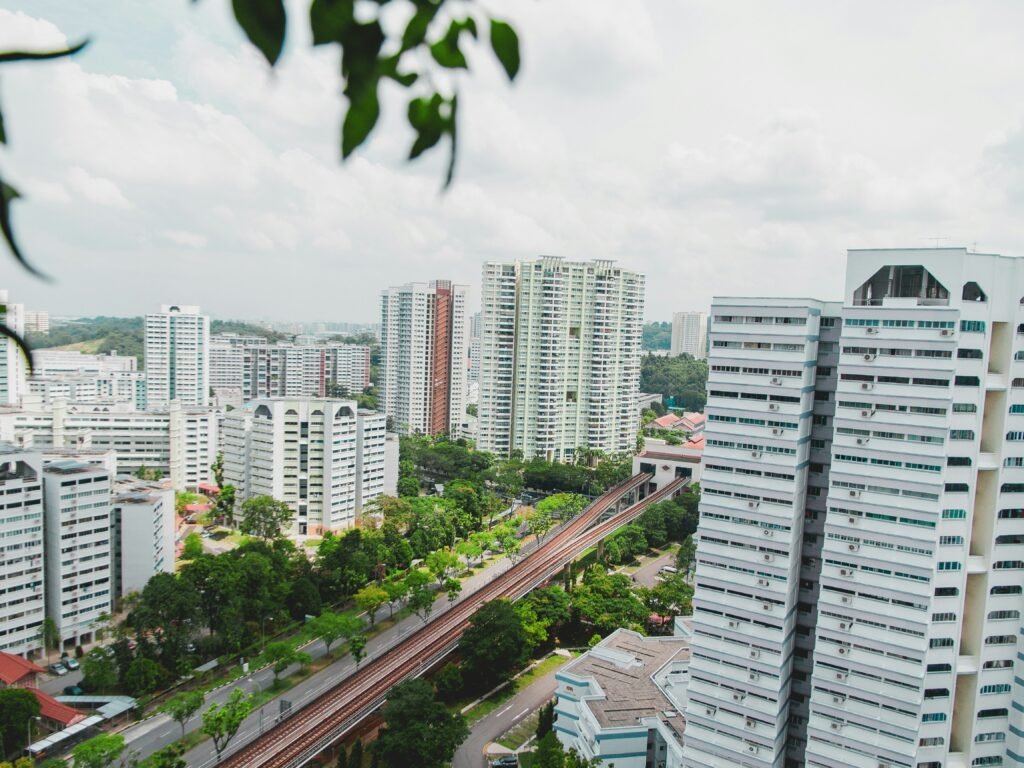
Photo by Alex Safareli on Unsplash
The SEA office market hybrid work repricing story as it is usually presented flattens a regional picture that is actually diverging. Singapore’s Grade A core central business district office market closed 2024 with an occupancy rate above 94 percent and prime monthly rents sustained at approximately SGD 11.50 per square foot according to the JLL Asia Pacific Office Market Perspective Q4 2024, while Jakarta’s central business district closed the same period with Grade A vacancy above 22 percent and rental rates that have declined in real terms for four consecutive years. Manila’s prime office market carries structural vacancy near 20 percent. Kuala Lumpur sits between, with Grade A vacancy in the mid-teens and Bangkok’s prime inventory now carrying approximately 17 percent vacancy. The hybrid work narrative explains a portion of this, but it does not explain the spread.
The spread is what strategy leaders need to read. The cities absorbing vacancy most successfully are those where corporate occupier demand is anchored by financial services, regional headquarters activity and multinational operational hubs that require in-office presence as a business continuity and compliance constraint. The cities where vacancy is structural are those where the occupier base was weighted toward offshore services, back-office BPO operations and domestic conglomerate tenants whose remote work adoption has proceeded with little retrenchment. This is a divergence in occupier composition, not a regional difference in hybrid work adoption rates.
The Singapore Anomaly
Singapore’s Grade A office market closed 2024 in a condition that contradicts the global prime office narrative. The CBRE Singapore Q4 2024 Office Figures recorded the Core CBD Grade A occupancy at approximately 94.7 percent, net absorption remained positive through the year, and rental rates in the premium micro-markets of Raffles Place, Marina Bay and Shenton Way sustained above the pre-pandemic peak. The structural reason is that Singapore’s occupier base is concentrated in financial services and regional headquarters functions, both of which have required in-office density for regulatory supervision, client-facing interaction and talent-development reasons that hybrid work policies have not dissolved.
The secondary reason is that Singapore’s Grade B stock has absorbed much of the space-consolidation impact. Occupiers who have downsized have generally traded down from Grade B to smaller Grade B or Grade C footprints, or have vacated older buildings entirely, rather than reducing Grade A footprints. This has produced a two-tier market outcome where prime remains firm and secondary carries the adjustment cost.
The Jakarta and Manila Divergence
Jakarta’s office market has been repricing for four years, and the repricing is not primarily driven by hybrid work. The CBD carries significant oversupply from the 2019 to 2022 delivery pipeline, which coincided with a slowdown in domestic corporate expansion and the repositioning of some multinational occupier footprints into lower-cost locations within the Jabodetabek metropolitan area. Hybrid work accelerated a correction that was already structural. Grade A rents in the SCBD and Sudirman corridors have declined approximately 18 percent from 2019 peaks in local currency terms and further in US dollar-equivalent terms given the rupiah’s weakening over the same period.
Manila’s office vacancy story is dominated by the contraction in the business process outsourcing sector’s Grade A footprint. The Colliers Philippines Q4 2024 Office Market Report recorded Metro Manila Grade A vacancy above 20 percent, with the Bonifacio Global City submarket absorbing particular pressure as BPO tenants renewed at reduced footprints or relocated to provincial operations. The Philippine government’s 2023 tax incentive adjustments affecting registered business enterprises within Peza zones further shaped the decision calculus for BPO occupiers. Hybrid work is part of the story, but industry-specific policy and structural demand shifts drive the majority of the Manila vacancy level.
The Strategic Read for Regional Occupiers
For multinational occupiers planning regional footprint decisions through 2026 and 2027, the SEA office repricing carries three strategic implications that the regional-average commentary obscures. The first is that Singapore Grade A is no longer a cheap flexibility option. Occupiers who delayed Grade A commitments expecting post-pandemic softness are facing renewal rates near or above pre-pandemic levels, and the expansion space premium in the Marina Bay and Raffles Place micro-markets has widened.
The second implication is that Jakarta and Manila present a genuine reposition opportunity for cost-sensitive occupier functions, provided the occupier is positioned to absorb the currency and regulatory execution risk. Grade A rental rates below USD 20 per square metre per month in Jakarta’s CBD create operational cost-base advantages that are difficult to replicate in more stable markets. The tradeoff is political and currency risk pricing, a calculation that our analysis of how Thailand’s governance risk is being quantified by institutional capital illustrates for an adjacent market.
The third implication is that the flight-to-quality pattern visible in Singapore will play out across other SEA markets with a lag. Bangkok’s Grade A premium over Grade B has widened through 2024 and is expected to continue widening. Kuala Lumpur’s prime stock in KLCC and Tun Razak Exchange has begun to separate from older Grade B inventory in the Bangsar and Mont Kiara corridors. This separation creates a tactical opportunity for occupiers willing to commit to quality space at the current point in the cycle, before prime rental rates rebase upward in the 2026 to 2027 delivery cycle.
What the Office Repricing Says About Regional Capital Allocation
The office repricing carries a broader signal for how institutional capital is reading SEA commercial real estate. The capital flowing into Singapore Grade A and Bangkok prime stock is the same capital profile that has been concentrating into SEA luxury residential, as our analysis of HNW capital movement in SEA luxury housing documents. The jurisdictions attracting institutional commercial real estate inflow are the same jurisdictions attracting institutional residential and family office allocation. The pattern is not coincidental. It reflects the same sorting criteria operating across asset classes within the region.
What strategy leaders typically miss in reading the hybrid work narrative is that the real office market story in SEA is a sorting story, not a demand-destruction story. Total occupier demand across the region has redistributed rather than collapsed, both across markets and within markets from Grade B to Grade A. The operators who continue to present the SEA office market as uniformly weak are reading a regional average that is no longer a useful unit of analysis. The more useful question concerns which submarkets and which building tiers are receiving the redistributed demand, and that is where the commercial property pricing signal is now concentrated.