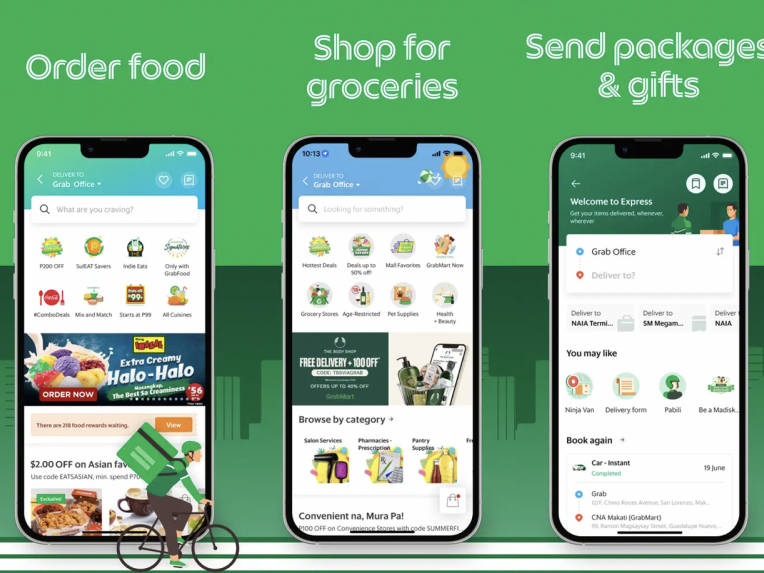
Grab went public in December 2021 via a SPAC merger that valued the company at approximately US$40 billion. The pitch was coherent: a Southeast Asian super-app model had built the dominant platform across ride-hailing, food delivery, and financial services across the most digitally active emerging market bloc in the world. The ecosystem flywheel argument that users retained across multiple services would generate compounding lifetime value was credible enough to clear the bar for institutional investors who rarely bet this large on unproven markets.
Five years of data later, the Grab super-app model Southeast Asia investors backed has produced something more complicated. The company did not collapse. According to Grab’s Q4 2024 earnings release and full-year 2024 results, the group achieved adjusted EBITDA profitability, which is a genuine operational milestone. But the business that emerged from the cash-burn years looks different from the one that was sold in the SPAC prospectus, and the gap is instructive for anyone thinking about platform economics in emerging markets.
What the Super-App Thesis Actually Required
The super-app logic depends on a specific chain of causality. Users who interact with a platform across multiple services develop switching costs that make retention structurally stronger than in single-product businesses. More frequent interaction generates more data, which enables better product personalization and risk assessment, which makes each new service incrementally cheaper to operate. Shared infrastructure, including payments rails, driver networks, and merchant relationships, reduces marginal cost as product count increases. At scale, the whole becomes more defensible than any individual product.
This is a real phenomenon. WeChat in China is the cleanest example, and it has genuinely operated as described. Grab’s theory of the case was that Southeast Asia would produce an analogous structure, with the added advantage of being the early mover building the cross-regional infrastructure.
The problem is that WeChat was building on top of an already-unified messaging layer that 90% of Chinese smartphone users relied on for daily communication. It did not need to win market share in any vertical from scratch because it already had the attention. Grab was trying to build the connective tissue and win the verticals simultaneously, in eight different regulatory environments, with different competitive dynamics in each country. That is a fundamentally different challenge, and the unit economics reflect it.
Where the Model Runs Into Reality
Food delivery is illustrative. GrabFood operates in a market with structurally difficult economics: high delivery costs, merchant margin pressure, and customer behavior that is promotional rather than loyal in most Southeast Asian markets. DealStreetAsia’s coverage of the Southeast Asian super-app competitive landscape documents how competitors including GoTo’s GoFood in Indonesia, Foodpanda, and local players in Vietnam and the Philippines have kept competitive intensity high enough that margins in food delivery have been compressed across the regional industry, not just at Grab.
The cross-sell argument has proven directionally true but weaker in practice than the prospectus implied. A user who rides with Grab is indeed more likely to order GrabFood. But the subsequent step toward GrabFinancial services is longer and more expensive to achieve than the ecosystem model assumed. The pattern plays out across digital bank platforms in Southeast Asia as well: user acquisition and activation are achievable, but translating a broad active user base into profitable financial products is a longer and more expensive process than most of these platforms modeled.
GrabFinancial is the part of the business that theoretically justifies the super-app premium. Financial services carry higher margins than logistics, the data advantage from transaction history is a real underwriting edge, and the total addressable market in an underbanked region is genuinely large. But fintech in regulated markets moves slowly. Acquiring lending licenses, managing NPL ratios on a lending book built during high-growth conditions, and achieving deposit scale in countries where bank trust is well-established — these are not product challenges. They are institutional and regulatory challenges that compound over years, not quarters.
What Founders Should Take From This
The Grab story is not a failure narrative. Reaching group-level profitability while maintaining market leadership across multiple Southeast Asian countries is a real achievement. The question is whether the business that emerged justifies a super-app valuation premium, or whether it is better understood as a bundle of individually competitive but margin-constrained businesses that share infrastructure.
That framing matters for founders building in the region today. The portability problem that affects regional expansion is related but distinct. As covered in the analysis of why SEA companies built for one market often struggle to replicate their model elsewhere, the regulatory and consumer behavior divergences across SEA markets impose real expansion costs that the super-app thesis tends to smooth over. The assumption that scale in one market accelerates economics in adjacent markets is less reliable than the pitch deck version suggests.
The more durable lesson is about what platform economics actually requires. Bain & Company’s Southeast Asia Digital Economy Report tracks how the regional digital market has matured: user acquisition costs have risen, engagement per user has plateaued in several categories, and the assumption that cross-vertical bundling produces compounding economics has been tested against five years of actual operating data. A flywheel works when there is a genuine shared resource, whether data, infrastructure, or trust, that each new product draws on without proportional incremental cost. Grab does have shared assets: the driver network, the payments layer, the merchant relationships. The question is whether those assets provide sufficient advantage in each vertical to offset the competitive intensity that comes with operating in markets where well-capitalized local and global competitors are also present.
The Contrarian Read
The honest answer is that Southeast Asia probably did not need a super-app in the WeChat sense. It needed multiple best-in-class products that could dominate their individual verticals, some of which might share infrastructure for cost efficiency. The older conglomerates in the region have operated this way for decades — diversified across verticals, sharing capital and relationships, but not pretending that adjacency alone creates compounding value.
What Grab built is closer to a portfolio of competitive businesses than to a genuine flywheel platform. That is not a dismissal. A portfolio of competitive businesses that serves 35 million users across Southeast Asia and generates adjusted EBITDA at group level is a significant commercial achievement. It is just not the same as what was presented in 2021, and pricing it accordingly matters for anyone still holding the thesis.