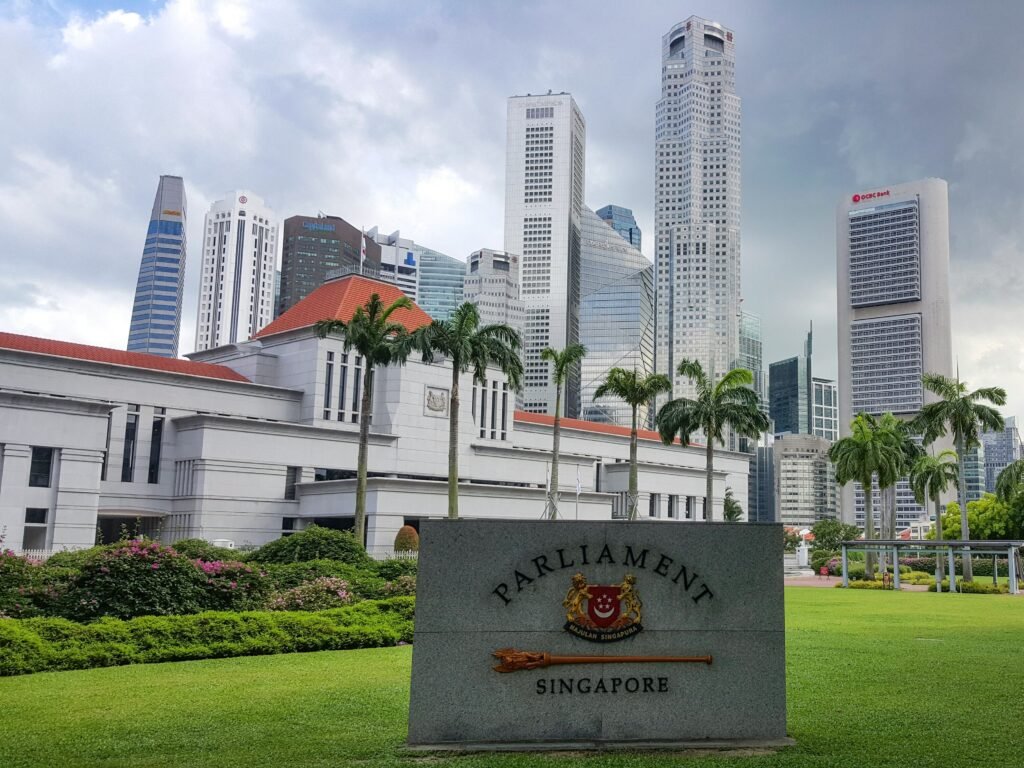
Photo by Danist Soh on Unsplash
The version of life insurance that most people encounter is straightforward in its marketing: a monthly premium purchases a payout if the insured person dies, giving dependants financial continuity. That framing is accurate. It is also incomplete, and the gap between that framing and how life insurance functions inside a sophisticated wealth structure explains why high-net-worth families in Southeast Asia treat it as a strategic instrument while most other buyers treat it as a recurring bill.
The underlying mechanics of life insurance as an estate planning tool for high net worth families in SEA have been in use for decades. What has changed is the deliberateness with which those mechanics are now being applied, particularly among Singapore-based families managing cross-border assets and multigenerational planning horizons.
The Gap Between How Life Insurance Is Sold and How It Is Used
Life insurance is typically sold as an income replacement product. The pitch centres on dependants: if you die, your family continues to receive an income equivalent. That framing resonates because it addresses a genuine and immediate concern, particularly for families with young children or high mortgage obligations.
Among high-net-worth buyers, the income replacement framing is secondary. The primary function they are purchasing is wealth transfer: the ability to move a defined sum of money from one generation to the next outside the standard estate administration process, often with significant tax and timing advantages depending on the jurisdictions involved.
In Singapore, there is no estate duty on assets held by individuals who pass away after February 2008. That change removed one of the most commonly cited tax advantages of life insurance as an estate tool in the local context. But tax efficiency is only one dimension of the estate planning use case. The others remain highly relevant for families managing significant wealth across multiple asset classes and jurisdictions.
The Estate Planning Mechanics
Life insurance proceeds paid to named beneficiaries bypass the estate and pass directly to those beneficiaries outside the probate process. For a family holding substantial assets across private equity investments, property, business interests, and financial accounts, the liquidity problem at death is often more acute than the tax problem. Illiquid assets cannot easily be divided or liquidated quickly. A life insurance policy that pays out a defined sum within days of a claim being submitted gives beneficiaries immediate cash to manage estate costs, maintain business operations, or equalise distributions among heirs without forcing a rushed sale of illiquid assets.
The second mechanical advantage is certainty of quantum. The sum assured in a whole life or universal life policy is contractually defined. A business owner with a significant stake in a private company cannot guarantee that stake will be valued the same way by a future buyer as it was at the time the estate plan was designed. The life insurance component of the estate provides a fixed, known amount that does not fluctuate with business conditions, property markets, or portfolio valuations.
For families with assets held across multiple jurisdictions, the third advantage is structural. A Singapore-domiciled life insurance policy with named beneficiaries creates a Singapore-governed asset with a clear and predictable claim process. The Monetary Authority of Singapore regulates the life insurance industry with well-defined rules around beneficiary designation and policy proceeds, which gives cross-border families a degree of certainty they may not have with assets held in less predictable regulatory environments.
Trust structures integrated with life insurance add a further layer of control. A life policy placed into a trust allows the policy owner to define not only who receives the proceeds but under what conditions and on what timeline. This is particularly relevant for families managing distributions across multiple generations, beneficiaries of different maturity levels, or wealth that spans jurisdictions with varying inheritance laws.
Why the Professional Class Tends to Underuse This Structure
The mechanics described above are not complex. They are also not obscure. The reasons most upper-middle-income professionals in Singapore underuse life insurance as an estate planning instrument tend to be practical rather than informational.
The first reason is product mismatch. The policies most widely distributed through banks and advisory channels in Singapore are designed around the income replacement use case. Whole life and universal life products with estate planning features exist in the market, but they are not the default recommendation in most sales conversations oriented toward a professional buyer with a young family and a 25-year mortgage. The advisor’s incentive structure and product shelf tend to produce term recommendations, which are appropriate for income replacement but do not build the permanent capital base that estate planning use cases require.
The second reason is planning horizon mismatch. Estate planning is a concern that most people defer until their assets are large enough to feel urgently relevant. For professionals in their thirties and forties building wealth across CPF, property, and private savings, the estate planning conversation tends to sit behind more immediate financial priorities. The practical consequence is that the period when whole life premiums are most affordable, specifically when the insured person is younger and in good health, passes before the planning conversation begins.
The third reason is integration complexity. Life insurance used as an estate tool works best as part of a coordinated structure that includes beneficiary designations on all assets, a will, and in more complex situations a trust. Building that coordinated structure requires cross-disciplinary advice across legal, financial, and insurance domains that most buyers do not access simultaneously.
What This Means for the Upper-Middle Professional
The estate planning use case for life insurance does not require family office-level wealth to be relevant. A professional in Singapore with a private property, a meaningful CPF balance, a term insurance plan, and financial investments has assembled an estate that will require administration at some point. The question is whether that administration will be straightforward for the beneficiaries or whether it will require time, legal process, and potentially forced asset sales.
For professionals in their forties with a growing asset base and dependants, the most practical starting point is a policy audit that maps current coverage against estate planning objectives rather than income replacement objectives alone. The questions worth asking are different. Rather than asking whether the death benefit is large enough to replace ten years of income, the question is whether the current structure ensures that beneficiaries have liquid access to funds within a reasonable timeframe without navigating a lengthy estate process.
A permanent life policy in the right quantum, with correctly designated beneficiaries, adds meaningful function to an estate plan without necessarily adding complexity. The gap for most professionals is not the product. It is the framing that reveals whether it belongs in their plan.
For context on how Singapore professionals typically approach insurance planning across their wealth structure, the analysis of Singapore’s insurance protection planning gap and what drives systematic underbuying across key coverage categories covers the broader environment. For those managing private wealth across multiple asset classes in Singapore, the piece on how Singapore family offices structure and protect assets across investment vehicles and jurisdictions addresses the broader wealth management context in which insurance sits.